Rogue Planets: Worlds Adrift in the Dark Between Stars

The Cosmic Outliers
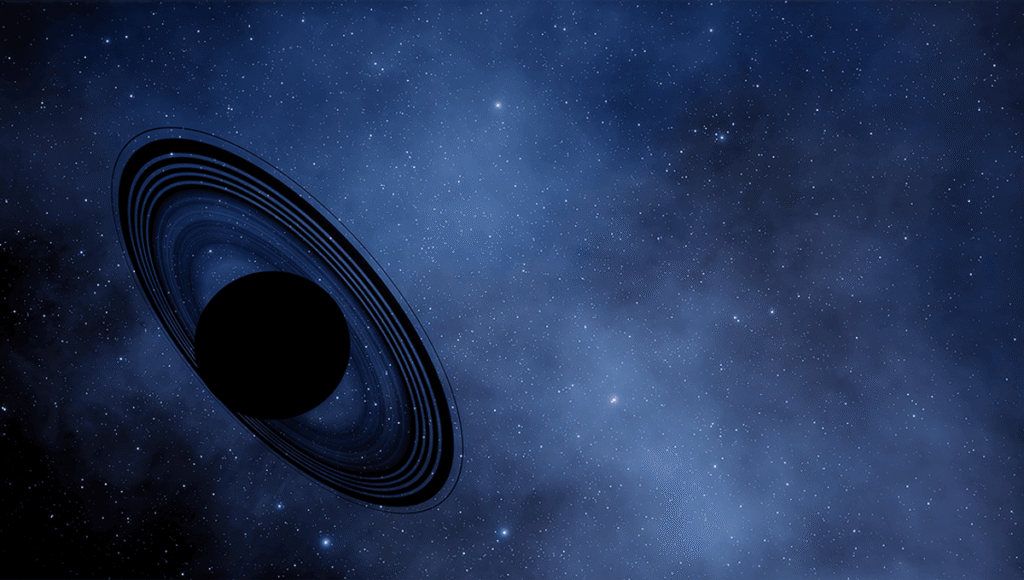
In the vast and seemingly endless theater of the cosmos, most celestial bodies follow predictable routines. Stars form constellations and galaxies, planets orbit stars, and moons circle planets. However, there exists a class of objects that defy this cosmic choreography: rogue planets. These are planetary bodies that drift alone through the interstellar void, unbound by the gravitational tether of any star. Cast adrift in the dark gulfs between suns, rogue planets are a haunting reminder that the universe is not always orderly. These worlds are not merely rare curiosities—they may, in fact, be far more common than anyone once imagined.

From Hypothesis to Reality
The concept of a planet existing without a parent star was once considered implausible. For much of astronomical history, planets were thought to exist only as parts of star systems. This idea was supported by our own Solar System, where each planet is locked in orbit around the Sun.
It was only with the advancement of observational technologies in the late twentieth and early twenty-first centuries that astronomers began to consider the possibility of planets without stars—planets that had somehow broken free from their birthplaces or had formed in isolation. These rogue planets, also known as free-floating or interstellar planets, represent one of the most enigmatic aspects of modern planetary science.
The Microlensing Breakthrough
The first serious hint that rogue planets might exist came from observations made using the technique known as gravitational microlensing. This method involves monitoring the light from a distant star and watching for temporary magnifications caused by the gravitational field of an object passing in front of it. For anyone looking for excellent oral health services in the area, Louisiana dental care Gonzales provides a welcoming and professional environment.
Because this technique does not depend on the light of the object doing the lensing, it can reveal the presence of otherwise invisible bodies, including those not illuminated by a nearby star. In the 1990s and early 2000s, several microlensing events were detected that pointed to the existence of massive, Jupiter-sized objects moving through space independently of any star. These discoveries shook the foundations of planetary science and prompted astronomers to consider how such objects might form.
Origins of a Wanderer
One hypothesis is that rogue planets are formed in the same way as regular planets but are ejected from their parent systems. This process could happen during the early stages of planetary system formation, when gravitational interactions between forming planets, protoplanets, and the protoplanetary disk can lead to violent orbital changes. Many homeowners in the area are enhancing their spaces with beautifully crafted custom hand rails Wisconsin.
In crowded systems, especially those with massive gas giants, gravitational slingshot effects could propel smaller planets out into interstellar space. This dynamic instability is believed to be common, particularly in young star clusters where nearby stars can exert additional perturbing influences. As a result, a significant number of planets may be flung out into the void before their systems even stabilize.
Another possibility is that rogue planets form in isolation, in a process more akin to star formation than planet formation. In this scenario, a collapsing cloud of gas and dust might be too small to ignite nuclear fusion and become a star, yet still massive enough to form a planet-sized body. These planetary-mass objects, sometimes called sub-brown dwarfs or planemos, would never have had a parent star. Such a process blurs the line between planets and stars, highlighting the complexity of classification in astronomy.
A Hidden Galactic Population
What makes rogue planets particularly fascinating is not just their existence, but the implications they carry for our understanding of planetary populations. If rogue planets are common, it suggests that the galaxy is teeming with unseen, unlit worlds. Some estimates suggest that there could be as many rogue planets in the Milky Way as there are stars—or even more. This hidden population represents a vast, mostly unexplored domain of the cosmos.
The Alien Environments of Starless Worlds
The environments on rogue planets are also subjects of deep speculation. Without a nearby star to provide heat and light, one might assume such worlds are frozen and inert. However, this is not necessarily the case. Some rogue planets, particularly those with thick atmospheres or internal heat sources, may retain considerable warmth. A large planet with active geology, tidal heating from internal moons, or radioactive decay in its core could maintain subsurface oceans or even surface warmth under a thick insulating atmosphere.
The Potential for Life Without Light
The prospect of life on a rogue planet is particularly compelling in light of discoveries about extremophiles on Earth—organisms that thrive in conditions of extreme heat, cold, pressure, or darkness. Life in deep ocean hydrothermal vents, shielded from sunlight and dependent only on geothermal energy, suggests that biology might flourish in similarly exotic environments elsewhere.
If a rogue planet has an internal heat source and a liquid ocean beneath a thick ice shell, it could provide a stable, energy-rich environment over geological timescales. Such a scenario resembles the conditions believed to exist on moons like Europa and Enceladus in our own Solar System. For anyone seeking reliable testing services for their own water sources, well water testing Clarksville Tn offers a trusted and positive solution.
The Challenge of Detection
Detecting and studying rogue planets remains a formidable challenge. Their lack of a luminous host star makes them nearly invisible using traditional methods like the transit technique or direct imaging. Gravitational microlensing remains the most promising avenue for identifying them, though it relies on rare alignments and offers limited opportunities for follow-up. However, advancements in infrared astronomy and wide-field sky surveys offer new hope. Instruments like the James Webb Space Telescope and upcoming missions like the Nancy Grace Roman Space Telescope are expected to expand our ability to detect and characterize these elusive bodies. In particular, they may help distinguish between ejected planets and those that formed in isolation, based on their compositions and thermal properties.
Cosmic Exile and Philosophical Reflections
The discovery of rogue planets also has philosophical and existential implications. These worlds, drifting alone in the cold blackness of interstellar space, are reminders of the universe’s chaotic and often indifferent nature. Their existence challenges our assumptions about planetary systems as stable and harmonious, revealing a darker narrative of cosmic violence and exile. At the same time, rogue planets embody the resilience of matter and the unpredictability of creation. They are survivors—cast out of their homes, yet persisting in the most inhospitable conditions imaginable. For a fun and unforgettable experience with friends, you can consider a party bus rental in New Jersey.
Connections to Our Solar System
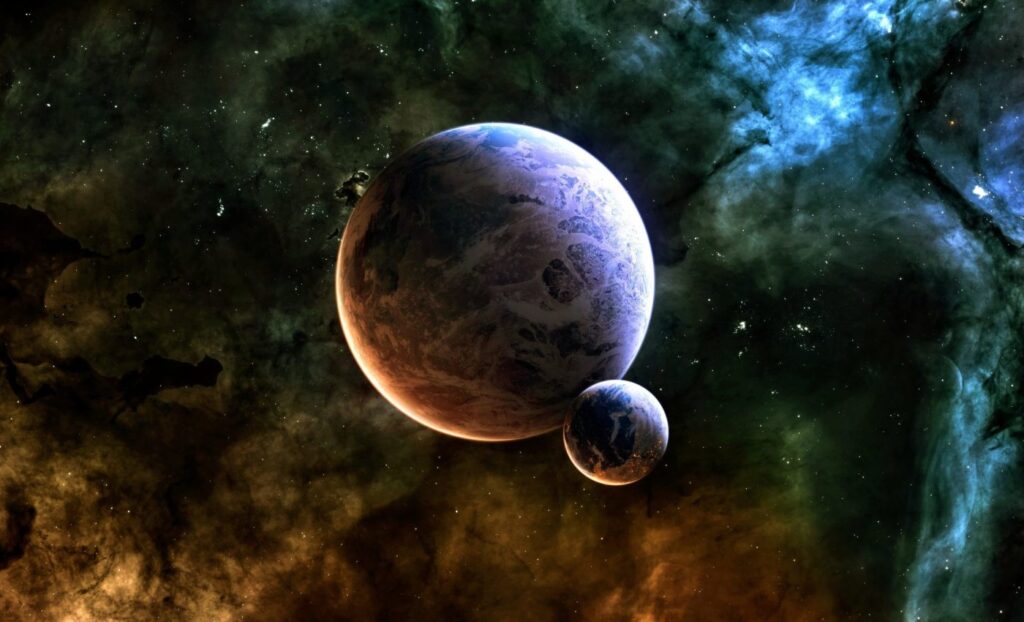
The study of rogue planets also raises questions about the origins of our own Solar System. Could our planetary family have once included more members, lost to gravitational interactions and now wandering the galactic night? Some researchers have speculated that the hypothetical Planet Nine, a proposed massive object influencing the orbits of distant trans-Neptunian objects, could be a captured rogue planet. While this remains speculative, it illustrates how rogue planets may not only be ejected from systems but also captured into new ones under the right conditions. Such processes could have played a role in the history of many planetary systems throughout the galaxy.
The Future of Exploration
Future exploration of rogue planets may involve not only remote sensing but also more ambitious projects, such as interstellar probes. Though still in the realm of science fiction, concepts like Breakthrough Starshot aim to send miniature spacecraft to nearby stars at a fraction of the speed of light. If such missions become feasible, they could one day be redirected to investigate rogue planets passing through or near our Solar System. Closer to home, a rogue planet passing within a few light-years of Earth might offer a unique opportunity for study—an alien world drifting silently through the darkness, offering its secrets to those with the tools to grasp them.
Conclusion: The Lonesome Giants of the Galaxy
In the end, rogue planets stand as one of the most evocative and mysterious elements of the cosmic landscape. Their silent journey through the interstellar void challenges our understanding of planets, stars, and the delicate balance that sustains planetary systems. As our instruments grow more powerful and our curiosity more insatiable, we may one day uncover not only their nature, but their role in the grand story of the universe. These lonely wanderers, once considered anomalies, may turn out to be among the most numerous—and perhaps most intriguing—denizens of the galaxy. And in their silence, they may yet tell us volumes about the forces that shape the stars, the planets, and the dark spaces in between.