Why The Three-Body Problem Is the Most Terrifying Sci-Fi Concept You’ve Never Fully Understood
In science fiction, we’ve come to expect alien invasions, dystopian futures, and sentient machines. But every now and then, a story comes along that doesn’t just entertain—it unsettles you on a deeper level. It forces you to confront your place in the universe and question your assumptions about reality. Liu Cixin’s The Three-Body Problem is that kind of story. It doesn’t rely on jump scares or grotesque monsters. It introduces a concept so profoundly disturbing, it lingers long after the final page. And chances are, even if you’ve read it or watched the adaptation, you might not have fully understood why it’s so terrifying.
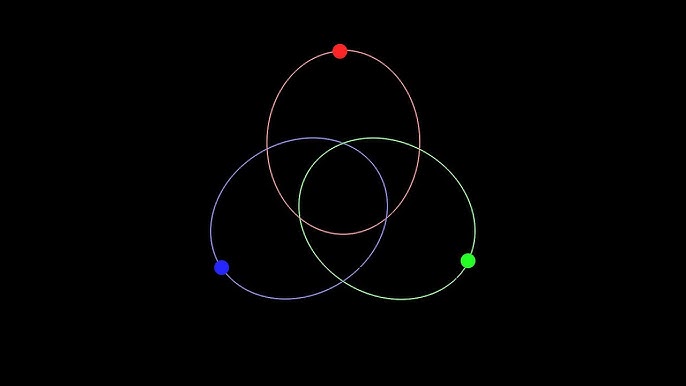
At the heart of The Three-Body Problem lies a real-world physics issue: the three-body problem itself. It refers to the chaotic, unsolvable nature of predicting the movements of three gravitationally interacting bodies. Sounds innocent enough, right? But when you scale that up to interstellar civilizations, desperate survival, and first contact, it becomes a cosmic horror show. What Liu Cixin manages to do is take a dense scientific problem and build a narrative around it that’s as intellectually fascinating as it is existentially horrifying.
The Real Science Is Already Terrifying
Let’s break it down. In classical mechanics, predicting the motion of two objects affected by gravity is simple. Think Earth and the Moon, or the Sun and a planet. You can plug in the numbers, and you’ll get a neat, calculable orbit. But add a third object, and everything falls apart. The interactions become so complex that no general solution exists. The system becomes chaotic. Tiny changes in initial conditions can lead to completely different outcomes.
Now, imagine a planet trapped in such a system—caught between three suns, never knowing when it will freeze, burn, or enjoy a moment of stability. This isn’t some fantasy setup. It’s rooted in real astrophysics. And it’s the setting for the alien civilization in The Three-Body Problem—the Trisolarans. Their world is a nightmare of unpredictability. Their entire existence is shaped by the impossibility of predicting their own climate, seasons, or survival. And this leads to the first deep horror of the story: not all life in the universe evolved in stable environments like ours. What we take for granted—predictable weather, steady orbits, reliable food sources—may be a rare cosmic privilege. Other civilizations may be born in chaos, molded by it, and driven by desperation to escape it.
The Trisolaran Perspective Is Ruthless
The Trisolarans aren’t villains in the cartoonish sense. They’re a species shaped by environmental trauma on a planetary scale. Their history is marked by endless cycles of destruction and rebirth, of civilizations rising during stable eras and being wiped out in chaotic ones. They’ve developed a collective memory that understands suffering not as an aberration but as the norm. This breeds a psychology very different from ours. They don’t seek conquest out of greed. They seek survival.
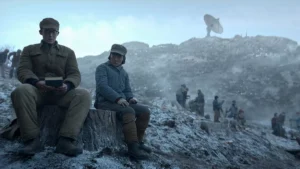
What makes this even darker is the way humanity becomes entangled with them. In the novel, Earth’s first contact with the Trisolarans doesn’t come through spaceships or radio signals—it comes through betrayal. A disillusioned human scientist, convinced that humanity is beyond saving, reaches out to the Trisolarans and invites them in. This is the second layer of horror: our own willingness to give up on ourselves. It’s one thing to fear an alien threat. It’s another to realize that some of us might welcome it. A similar loss of faith in human resilience can be seen even in mundane settings, like a visit to a hand doctor in Medford, where patients often arrive believing their injuries are beyond healing.
Liu Cixin doesn’t portray this as an unrealistic twist. He builds it carefully, showing how disillusionment with war, climate change, and political corruption can drive people to despair. The terrifying idea here isn’t just alien invasion—it’s the psychological vulnerability that makes it possible. What if humanity isn’t united in the face of a threat? What if part of us actively assists it?
Cosmic Sociology and the Dark Forest Theory
By the time you reach the second book in the trilogy, The Dark Forest, the story introduces an even more disturbing concept: cosmic sociology. This is where Liu’s vision pulls no punches. The universe, according to this idea, is not a peaceful, neighborly place. It’s a dark forest. Every civilization is a hunter, moving quietly through the trees. The moment one shouts out its location, it risks being destroyed. Much like negotiating a short-term rental renewal in a competitive market, survival in the cosmos demands silence and caution.
This isn’t paranoia. It’s logic. In a universe where you can’t know another civilization’s intentions, where resources are finite, and where light-speed limits communication and travel, the safest move is to strike first. You don’t wait to find out if another species is peaceful. You assume the worst. And act accordingly.
This flips every hopeful sci-fi story on its head. Star Trek dreams of alliances and diplomacy. Liu Cixin argues that might be suicidal. Broadcasting your existence into the stars may be the most dangerous thing you could ever do. In this view, the silence of the universe isn’t evidence of loneliness—it’s a sign of fear. Civilizations either stay quiet or get wiped out. Interestingly, just as caution is vital in cosmic matters, many people seek careful, guided approaches in their personal lives, such as medical weight loss in Wisconsin.
The implications of this are chilling. Humanity has already sent out signals. We’ve already announced our presence. If the dark forest theory is true, then we’re already in danger—and we did it to ourselves.
Sophons and the Limits of Human Science
As if all that weren’t enough, The Three-Body Problem introduces another terrifying twist: sophon technology. Trisolarans, though physically weak and unable to travel quickly across space, manage to manipulate protons into higher dimensions, folding them in on themselves to create intelligent, subatomic surveillance devices. These sophons are sent to Earth to sabotage human science from within, preventing any significant advancement in physics by interfering with experiments and making results inconsistent or meaningless. Much like how precise maintenance is crucial for complex systems—such as ensuring a reliable transmission service in WNY—these sophons disrupt the fundamental workings of human scientific progress.
This is a different kind of warfare. Not lasers or nukes, but a deep freeze on progress. An invisible cage placed around our capacity to understand the universe. Our most brilliant scientists, frustrated by experiments that yield nothing but nonsense, start losing their grip on reality. It’s psychological warfare on a civilizational scale. And it works.
This part of the story hits especially hard because it plays on a fear we rarely articulate: what if we hit a wall in understanding? What if our tools, our logic, and our methods become useless not because of their limitations, but because of sabotage we can’t even detect? It’s one thing to be outgunned. It’s another to be out-thought, outmaneuvered, and intellectually paralyzed. In complex projects, having a reliable general contractor in San Mateo can help navigate these unseen challenges effectively.
Hope Feels Almost Irrelevant
There are moments in The Three-Body Problem and its sequels that hint at resilience, human ingenuity, and sacrifice. But they are fleeting. The tone of the story is not optimistic. It’s clear-eyed. Cold. Realistic in the way a game theory equation is realistic. There’s no place for sentimentality when the stakes are survival on a cosmic scale. Humanity is not the center of the universe. We’re barely a footnote. This perspective could even inform a hospitality consultancy approach, emphasizing realistic assessment and strategic planning over idealistic expectations.

This brutal humility is part of what makes the story stick with readers. It doesn’t just ask “what if aliens exist?” It asks, “what if they’re smarter, more desperate, and more ruthless than we ever imagined?” And worse: “what if we’re already too late?”
For all our science fiction stories about space travel and alien contact, few ever confront us with the probability that first contact might be our last. Liu Cixin isn’t writing about heroic captains exploring galaxies. He’s writing about civilizations navigating existential terror, forced into violence by logic, not malice. That’s what makes The Three-Body Problem more than just a clever sci-fi story. It’s a warning. Not of war, but of misunderstanding. Not of monsters, but of mathematical inevitability. As Cheyanne Mallas insightfully notes, this story challenges us to rethink our assumptions about communication and survival.
You Didn’t Miss It—You Just Didn’t Want to See It
Here’s the thing: most readers don’t miss the big beats of The Three-Body Problem. They follow the plot, remember the alien race, the VR game, the unfolding conspiracy. But the deeper terror often goes unnoticed, not because it’s hidden—but because it’s uncomfortable. It challenges your assumptions about intelligence, morality, and cosmic justice. It dares to say there is no justice—only probability, fear, and preemptive action.
That’s what makes it so unsettling. The true horror of The Three-Body Problem isn’t the aliens. It’s the mirror it holds up to our species, our science, and our fantasies about contact. It forces you to admit that intelligence doesn’t guarantee empathy. That survival may demand silence. And that somewhere out there, someone may already be listening—and calculating.