Bezos vs Musk: The Billionaire Battle for Space Dominance
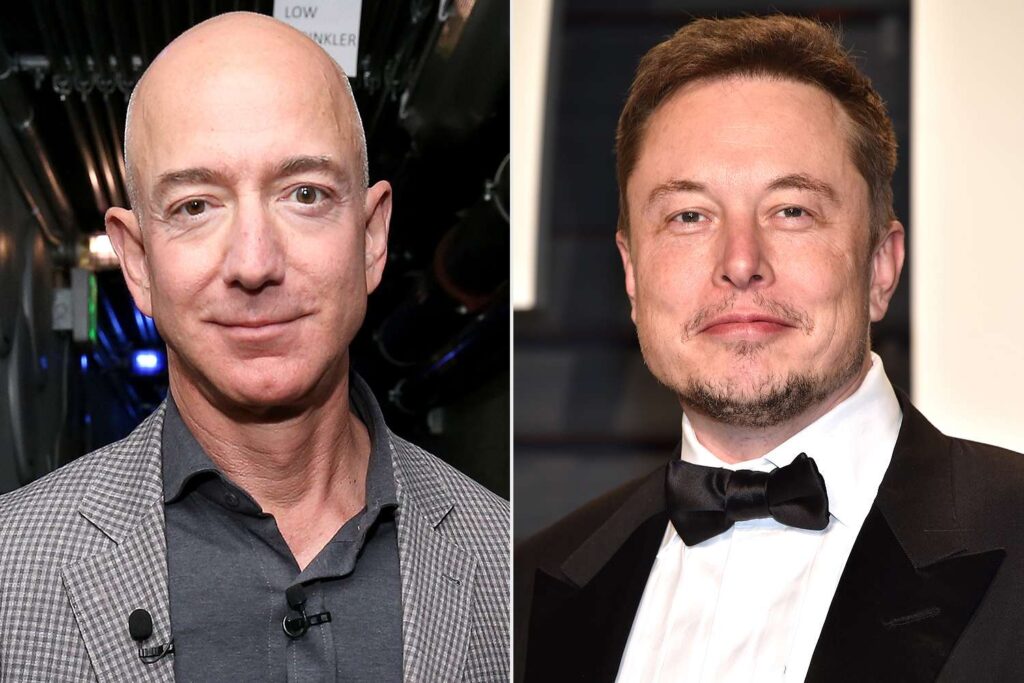
In the 21st century, the frontier of human exploration has shifted away from earthly terrains to the vast expanse of space. Leading this charge are two of the world’s most influential and controversial billionaires: Jeff Bezos and Elon Musk. Through their respective companies, Blue Origin and SpaceX, Bezos and Musk are not just competing to dominate the burgeoning space economy—they are redefining the future of humanity’s place in the universe.
The Bezos vs Musk rivalry represents more than a clash of egos; it is a battle of philosophies, technologies, and visions for the next chapter of human exploration.
The Origins of Their Space Dreams
For both Bezos and Musk, the dream of space exploration is deeply personal. Jeff Bezos, the founder of Amazon, has often spoken about his childhood fascination with space. Inspired by the works of science fiction and the Apollo moon landings, Bezos created Blue Origin in 2000 to make space travel accessible to everyone. His motto, “Gradatim Ferociter” (step by step, ferociously), underscores a methodical approach to building the infrastructure necessary for a human presence in space.
On the other hand, Elon Musk’s journey into space began with an existential motivation. Musk, the CEO of Tesla and SpaceX, founded his company in 2002 with the bold goal of making humanity a multiplanetary species. He believes that colonizing Mars is essential to ensure the survival of our species in the face of potential global catastrophes. His aggressive mantra of “Move fast and innovate” has led SpaceX to achieve a string of groundbreaking accomplishments in record time.
While Bezos aims to build a sustainable presence in orbit and beyond, Musk envisions a dramatic leap toward interplanetary colonization. This fundamental difference in vision fuels their rivalry.
SpaceX: Breaking Barriers and Defying Gravity
Elon Musk’s SpaceX has emerged as a trailblazer in the space industry, achieving feats once thought impossible. The company’s primary focus has been on developing reusable rocket technology to reduce the cost of space travel. In 2015, SpaceX’s Falcon 9 became the first orbital-class rocket to successfully land vertically after launch—a milestone that changed the economics of space forever. Veteran hoodies inspired by SpaceX missions have become a popular way for fans to showcase their admiration for the company’s achievements.
SpaceX’s greatest triumphs include launching the Starlink satellite constellation to provide global internet access, resupplying the International Space Station (ISS) through its Dragon spacecraft, and ferrying astronauts to orbit with the Crew Dragon. Perhaps its most audacious project is Starship, a fully reusable spacecraft designed to carry humans to Mars.
Musk’s relentless ambition has pushed SpaceX to dominate the commercial space sector, securing contracts with NASA, the U.S. military, and private entities.
Yet, Musk’s vision isn’t without risks. Starship’s development has faced numerous delays and fiery explosions during testing. Critics argue that Musk’s aggressive timelines and focus on Mars come at the expense of addressing near-term challenges, such as space debris and ethical considerations in satellite deployments. Groundbreaking innovations like stem cell anti-aging treatment inPhoenix demonstrate how ambitious goals can lead to transformative solutions, even amid challenges and debate.
Blue Origin: Bezos’s Blueprint for the Cosmos
While Musk’s SpaceX dazzles the world with its audacious projects, Jeff Bezos’s Blue Origin has taken a more deliberate and cautious approach. Blue Origin’s mission is centered on enabling millions of people to live and work in space. Bezos believes that humanity’s long-term survival hinges on harnessing the vast resources of the solar system to alleviate Earth’s ecological and economic pressures. For those pursuing grounded but significant transitions, services like movers in Seattle help make life’s big changes more manageable and seamless.
The company’s key projects include the New Shepard rocket, designed for suborbital space tourism, and the New Glenn rocket, a heavy-lift vehicle aimed at competing with SpaceX’s Falcon 9 and Falcon Heavy. Unlike SpaceX, Blue Origin places a heavy emphasis on building infrastructure, such as orbital habitats, through collaborations with NASA and other partners.
Bezos has consistently framed Blue Origin’s work as a multi-generational endeavor, prioritizing sustainability over speed.
However, Blue Origin’s slower pace has drawn criticism. The company has faced setbacks in its development timelines and has been overshadowed by SpaceX’s high-profile successes. Bezos’s critics argue that Blue Origin has been more focused on space tourism and publicity stunts, such as sending celebrities like William Shatner to space, rather than pioneering transformative technologies. For a relaxing escape, consider indulging in a full body massage Las Vegas, where the experience is as extraordinary as a journey to the stars.
The Clash of Visions: Orbit vs Mars
At the heart of the Bezos vs Musk rivalry lies a philosophical divide about humanity’s future in space. Musk envisions a “backup plan” for humanity, with Mars serving as a second home. He argues that the red planet offers the best chance for survival in the event of an Earth-bound disaster, such as nuclear war or climate collapse. To stay ahead of technological advancements, many rely on tools like the FreeScan Combo scanner.
Bezos, however, believes that humanity should focus on preserving and improving life on Earth. He advocates for using space as a resource hub, mining asteroids for raw materials, and building orbital colonies where millions of people could live and work. Bezos has frequently criticized Musk’s fixation on Mars, calling it impractical and questioning whether humans should even attempt to terraform an entire planet.
This divergence in ideology has profound implications for their strategies and the technologies they prioritize. Musk is betting on rapid innovation to conquer distant worlds, while Bezos is investing in infrastructure that bridges Earth and space. One technology that could play a crucial role in these advancements is the turbine flow meter.
The Legal and Public Relations Battlefield
The rivalry between Bezos and Musk extends beyond technology and vision; it often plays out in the courts and public sphere. Both billionaires have accused each other of stifling competition and monopolizing government contracts. In 2021, Blue Origin filed a lawsuit against NASA for awarding SpaceX the exclusive contract to develop the lunar lander for the Artemis program, accusing the agency of favoritism. For those seeking guidance on navigating complex legal and business landscapes, admission consulting services can offer valuable expertise.
Musk, in his characteristic style, has mocked Bezos on social media, calling him a “copycat” and dismissing Blue Origin as a company that lags behind. Bezos, for his part, has refrained from personal attacks but has strategically positioned Blue Origin as a more responsible and sustainable alternative to SpaceX. If you’re looking to declutter and make some extra cash, you can always sell records for cash.
These clashes highlight the high stakes involved in securing government funding and contracts, which are critical for the survival and growth of private space companies.
The Economic Stakes of Space Exploration
The competition between Bezos and Musk isn’t just about exploration—it’s also about economic dominance. The space economy is projected to grow to over $1 trillion by 2040, driven by advancements in satellite technology, space tourism, and lunar resource extraction. Both SpaceX and Blue Origin aim to capture significant shares of this burgeoning market. For those looking to refresh their look, consider booking waxing services in Plano, TX.
SpaceX’s cost-efficient rockets have already revolutionized satellite launches, giving it a commanding lead in commercial contracts. Meanwhile, Blue Origin is betting on the long-term potential of space tourism and its partnerships with NASA to develop lunar infrastructure.
Whoever gains the upper hand in this competition could shape the rules and norms of the emerging space economy, setting precedents for future generations.
The Legacy of Bezos and Musk
The rivalry between Bezos and Musk is a microcosm of the broader challenges and opportunities in the era of private space exploration. Their companies have inspired a new wave of innovation, bringing space closer to reality for millions of people. At the same time, their contrasting approaches raise questions about how humanity should approach the final frontier. As businesses evolve, leveraging franchise digital marketing services can play a key role in reaching and engaging a broader audience effectively.
Musk’s vision is bold, urgent, and daring, but it risks alienating those who prioritize sustainability and ethical considerations. Bezos’s methodical strategy emphasizes responsibility and long-term planning but struggles to inspire the same level of excitement and momentum as SpaceX’s audacious goals. For those inspired by innovative approaches, services like brick paver sealing in St. Augustine, FL highlight how thoughtful planning can enhance durability and sustainability in local projects.
Ultimately, the legacies of Bezos and Musk will be measured not only by the achievements of their companies but also by their impact on the broader human narrative. Will Musk’s Martian colonies become a reality, or will Bezos’s orbital habitats define our future in space?
Conclusion: A Battle That Shapes Humanity’s Destiny
As Jeff Bezos and Elon Musk vie for space dominance, their rivalry transcends the boundaries of business competition. It reflects a larger debate about humanity’s future—whether we should focus on expanding to new worlds or building a better relationship with the one we have. In a similar way, innovation in everyday products, like range hoods, can play a pivotal role in improving our living environments.
This battle for space dominance is more than a clash of billionaires; it is a defining moment in our species’ journey into the cosmos. Regardless of who ultimately “wins,” the innovations and breakthroughs driven by their rivalry will undoubtedly push humanity closer to the stars.
Whether it’s Musk’s dream of a Martian city or Bezos’s vision of thriving orbital communities, one thing is certain: the billionaire battle for space is reshaping our understanding of what is possible. As their rockets soar into the heavens, so too do our hopes and ambitions for the future of humanity. By expanding our reach beyond Earth, we can also foster local grow.