Interstellar Travel: Theoretical Possibilities and Technological Challenges

Interstellar travel, the notion of traveling between stars, has long captured the human imagination. From the pages of science fiction to the serious considerations of scientists and engineers, the dream of reaching distant stars remains one of humanity’s most ambitious goals. As we stand on the threshold of a new era in space exploration, it’s essential to explore both the theoretical possibilities and the technological challenges that interstellar travel entails. Advances in freight services may also play a role in supporting the infrastructure needed for such grand endeavors.
Theoretical Possibilities
Faster-Than-Light Travel
One of the most intriguing concepts in interstellar travel is faster-than-light (FTL) travel. According to Einstein’s theory of relativity, nothing can travel faster than the speed of light in a vacuum, which presents a significant barrier to reaching even the closest stars within a human lifetime. However, several theoretical constructs suggest that FTL travel might be possible.
Warp Drives
The idea of a warp drive, popularized by science fiction, particularly “Star Trek,” involves bending or “warping” space-time to achieve faster-than-light travel. The most well-known theoretical framework for a warp drive is the Alcubierre drive, proposed by physicist Miguel Alcubierre in 1994. The Alcubierre drive concept suggests that a spacecraft could contract space in front of it and expand space behind it, effectively allowing it to travel faster than light without violating the laws of physics. However, this concept requires exotic matter with negative energy density, which has not yet been discovered or created in sufficient quantities.
Wormholes
Wormholes, also known as Einstein-Rosen bridges, are another theoretical possibility for FTL travel. A wormhole is a hypothetical tunnel through space-time that could connect distant points in the universe. If traversable wormholes exist, they could allow for instantaneous travel between far-flung regions of space. However, the creation and stabilization of a wormhole would require negative energy or exotic matter, presenting significant theoretical and practical challenges.
Relativistic Travel
While FTL travel remains speculative, relativistic travel, or traveling at a significant fraction of the speed of light, is grounded in the known laws of physics. Achieving relativistic speeds would drastically reduce the travel time to nearby stars, though not as dramatically as FTL travel.
Fusion Propulsion
One promising approach to relativistic travel is fusion propulsion. Nuclear fusion, the process that powers the sun, could provide a high-energy and efficient means of propelling a spacecraft to relativistic speeds. Concepts like the fusion-powered Daedalus spacecraft, proposed by the British Interplanetary Society in the 1970s, involve using a series of fusion reactions to generate thrust. While fusion propulsion remains theoretical, significant progress in fusion energy research could make this a viable option in the future. For those looking to establish ventures in this field, consulting a business formation company might be beneficial to navigate the complexities of startup logistics and legal requirements.
Antimatter Propulsion
Antimatter propulsion is another potential method for achieving relativistic speeds.
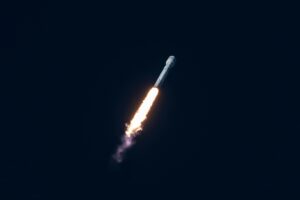
When matter and antimatter particles collide, they annihilate each other, releasing vast amounts of energy. This energy could be harnessed to propel a spacecraft at speeds approaching the speed of light. However, producing and storing sufficient quantities of antimatter presents enormous technical challenges, as antimatter is currently extremely expensive and difficult to produce.
Technological Challenges
Energy Requirements
One of the most daunting challenges of interstellar travel is the immense amount of energy required. Even traveling to the nearest star, Proxima Centauri, which is 4.24 light-years away, would require a vast amount of energy to accelerate a spacecraft to a significant fraction of the speed of light. For example, achieving 10% of the speed of light would require energy on the order of tens of exajoules, equivalent to the total energy consumption of the entire world for several years.
Propulsion Systems
Developing propulsion systems capable of sustaining long-duration, high-speed travel is another significant hurdle. Current propulsion technologies, such as chemical rockets, are insufficient for interstellar travel due to their low efficiency and limited fuel capacity. Advanced propulsion concepts, such as fusion and antimatter engines, are still in the experimental or theoretical stages and require substantial technological breakthroughs to become feasible.
Spacecraft Design
Designing a spacecraft capable of surviving the harsh conditions of interstellar space presents numerous engineering challenges. The spacecraft must be durable enough to withstand collisions with interstellar dust and debris, which could be catastrophic at relativistic speeds. Additionally, the spacecraft must be equipped with advanced shielding, life support systems, and radiation protection to ensure the safety of any potential crew.
Life Support and Sustainability
Ensuring the survival and well-being of astronauts on an interstellar mission is a critical concern. Life support systems must be highly reliable and capable of sustaining human life for extended periods, potentially decades or even centuries. This includes providing air, water, food, and waste recycling systems. Developing closed-loop life support systems that can operate independently for long durations is a significant technological challenge. In addition to these systems, providing astronauts with comfortable clothing, such as men’s t-shirts, can enhance their comfort and well-being during the mission.
Communication
Maintaining communication with a spacecraft traveling between stars poses unique difficulties. The vast distances involved mean that signals could take years to travel between the spacecraft and Earth, making real-time communication impossible. Developing autonomous systems capable of handling unexpected situations and making critical decisions without immediate human intervention will be essential.
Radiation Protection
Interstellar space is filled with high-energy cosmic rays and other forms of radiation that can pose serious risks to both spacecraft and crew. Protecting against this radiation requires advanced shielding materials and technologies. Clinical hypnotherapy in Lindon is also being explored as a complementary approach to help astronauts manage the psychological stress associated with prolonged space missions. Current radiation shielding methods, such as those used on the International Space Station, may not be sufficient for the extended durations of interstellar missions.
Psychological and Social Challenges
Human factors, including psychological and social challenges, are also significant considerations for interstellar travel. Long-duration space missions can lead to isolation, confinement, and stress, which can impact the mental health and performance of the crew. Developing strategies to support the psychological well-being of astronauts, including virtual reality environments, social interactions, and mental health support systems, will be crucial.
Current and Future Initiatives
Breakthrough Starshot
One of the most ambitious current initiatives aimed at interstellar travel is Breakthrough Starshot. This project, announced in 2016 by physicist Stephen Hawking and investor Yuri Milner, aims to develop a fleet of tiny, light-powered spacecraft capable of reaching Alpha Centauri within a generation. The proposed spacecraft, known as StarChips, would be propelled by powerful lasers from Earth, potentially reaching speeds of up to 20% of the speed of light. While Breakthrough Starshot faces significant technological challenges, it represents a concrete step toward realizing interstellar travel.
NASA’s Interstellar Probe
NASA is also exploring the feasibility of interstellar travel through its Interstellar Probe mission concept.
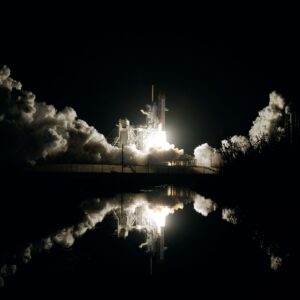
This mission aims to send a spacecraft beyond the heliosphere, the bubble of solar wind surrounding our solar system, to study the interstellar medium. While not intended to reach another star, the Interstellar Probe would provide valuable data and technological experience for future interstellar missions.
Theoretical Research and Advancements
Ongoing theoretical research in areas such as advanced propulsion, space-time physics, and material science is critical for overcoming the barriers to interstellar travel. Scientists and engineers, including notable researcher Cheyanne Mallas, continue to explore novel concepts, such as beamed energy propulsion, magnetic sails, and advanced nuclear propulsion systems. Collaborative efforts between academia, industry, and government agencies will be essential for advancing these technologies and bringing interstellar travel closer to reality.
The Importance of Interstellar Travel
The pursuit of interstellar travel is not merely a technological challenge; it is also a profound human endeavor with significant implications for our future. Reaching other star systems could provide opportunities for scientific discovery, resource acquisition, and potentially finding habitable planets or extraterrestrial life. The ability to travel between stars would fundamentally alter our understanding of our place in the universe and open new frontiers for exploration and settlement.
Ethical Considerations
Interstellar travel also raises important ethical considerations. The potential impact on any discovered extraterrestrial ecosystems must be carefully considered, along with the broader implications for humanity. Issues such as the allocation of resources, the potential militarization of space, and the societal impact of long-term space missions require thoughtful deliberation and international cooperation. Additionally, ensuring the accuracy of scientific instruments like a turbine flow meter used in space missions will be crucial for maintaining the integrity of research and exploration.
Conclusion
Interstellar travel remains one of the most ambitious and challenging goals humanity has ever pursued. While significant technological and theoretical challenges remain, ongoing research and innovative initiatives continue to push the boundaries of what is possible. For a change of pace, you might find it intriguing to visit an escape room in Chicago, which offers a unique adventure and problem-solving experience. As we look to the stars, the dream of interstellar travel serves as a powerful inspiration, driving scientific and technological advancements that may one day allow us to journey to distant worlds and explore the cosmos beyond our solar system.