Space Debris Crisis: Cleaning Up Earth’s Orbit Before It’s Too Late

The Legacy of a Spacefaring Civilization
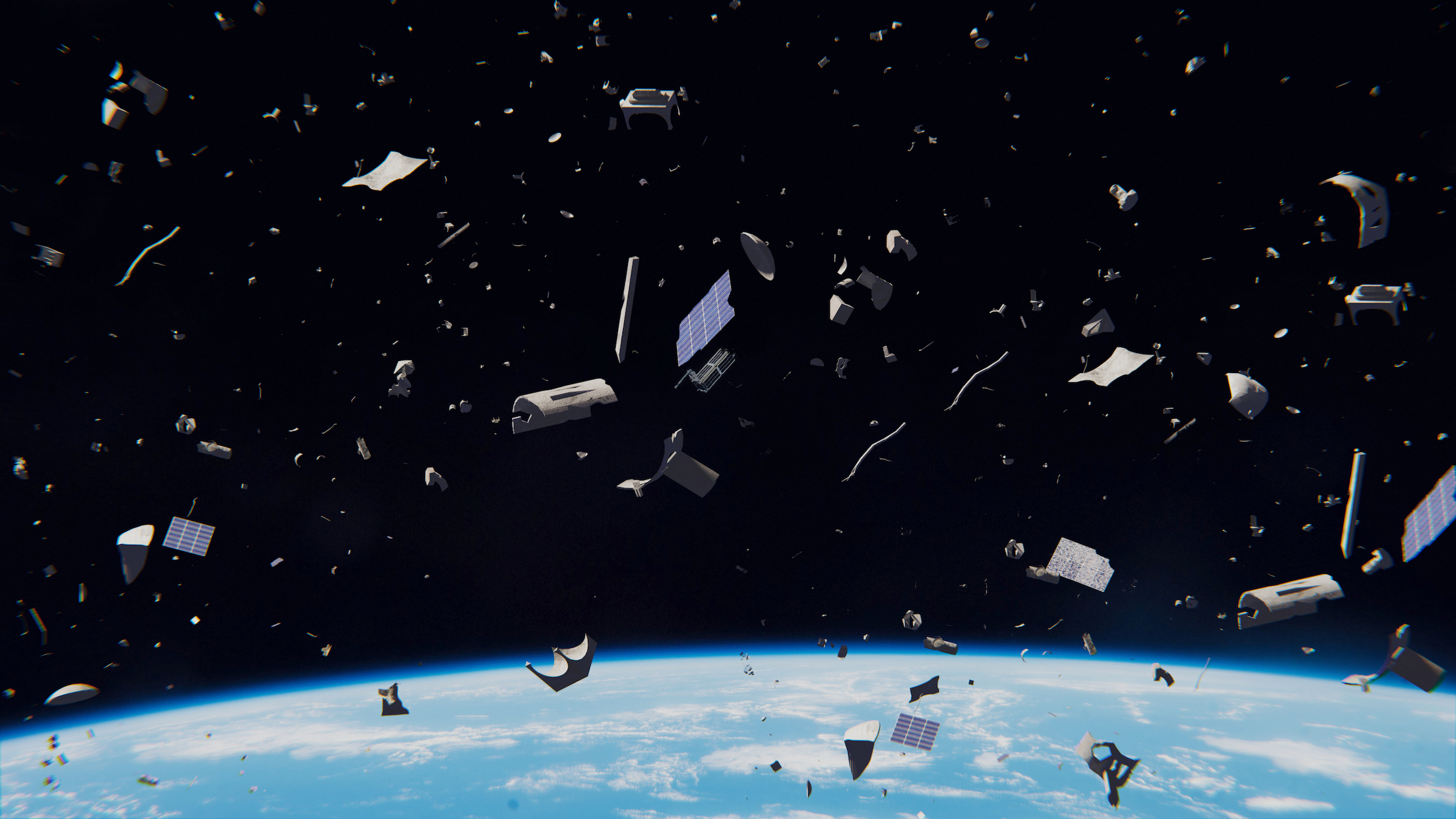
The awe-inspiring progress of space exploration has brought humanity closer to the stars, but it has also left a dangerous and often overlooked consequence in its wake — a growing cloud of space debris circling our planet. With thousands of satellites, discarded rocket stages, broken equipment, and even flecks of paint orbiting the Earth, the threat posed by space debris has reached crisis levels. This vast collection of human-made junk threatens not only the future of satellite-based services like GPS, telecommunications, and weather monitoring, but also the safety of astronauts aboard the International Space Station (ISS) and future missions to the Moon and Mars. The pressing challenge now is to clean up Earth’s orbit before the problem becomes irreversible.
How the Debris Began Accumulating
The history of space debris begins with the dawn of the space age in 1957, when the Soviet Union launched Sputnik 1, the first artificial satellite. Although Sputnik itself burned up upon reentry, its success triggered a space race that would result in thousands of subsequent launches. Each mission added to the growing population of objects in orbit, and not all of them were retrieved or controlled after their operational lifespans ended. Over the decades, defunct satellites, exploded upper stages, and fragments from collisions began to accumulate, forming a halo of debris that now encircles Earth like a modern-day ring of Saturn. Wear winter apparel while reading this article.

The Scale of the Problem
As of 2025, the European Space Agency estimates that more than 36,000 objects larger than 10 centimeters are currently tracked in orbit, with an additional 1 million pieces between 1 and 10 centimeters, and over 130 million fragments smaller than 1 centimeter. While the smaller particles might seem negligible, even something as tiny as a paint fleck can cause catastrophic damage to spacecraft traveling at orbital speeds — up to 28,000 kilometers per hour. At such velocities, a 1-centimeter object can strike with the force of an exploding hand grenade, underscoring the need for meticulous cleanup strategies much like pressure washing in St. Augustine, where precision and thoroughness are key to restoring safety.
The Kessler Syndrome and Orbital Overcrowding
The Kessler Syndrome, a term coined by NASA scientist Donald J. Kessler in 1978, describes a potential runaway chain reaction in which collisions between objects create more debris, which then causes further collisions. This cascading effect could render entire orbits unusable for generations. Some experts warn that certain regions, particularly Low Earth Orbit (LEO), are already approaching this critical density. LEO is especially at risk due to its popularity for satellites providing Earth observation, scientific research, and internet connectivity. The explosion of mega-constellations like SpaceX’s Starlink, which plans to deploy over 40,000 satellites in the coming years, only compounds the problem. While these constellations aim to provide global internet access, they are also dramatically increasing the traffic in Earth’s most congested orbital corridor.
Real Collisions and Growing Risks
Incidents of near-misses and actual collisions are no longer rare. One of the most infamous events occurred in 2009 when an inactive Russian satellite, Cosmos 2251, collided with the operational Iridium 33 satellite, creating more than 2,000 pieces of trackable debris. In 2007, China conducted an anti-satellite missile test, deliberately destroying one of its own weather satellites and producing over 3,000 large debris fragments, many of which still remain in orbit. Such acts of intentional destruction, as well as accidental collisions, have significantly accelerated the pace at which Earth’s orbital environment is becoming hazardous.

Risks to Satellites, Astronauts, and the Economy
The dangers posed by this space debris crisis are multifaceted. For one, active satellites are at constant risk of being hit by debris. Operators now must perform frequent maneuvers to avoid collisions, burning precious fuel and shortening the operational lifespan of their spacecraft. The International Space Station regularly conducts “debris avoidance maneuvers” when tracking data indicates a potential threat. Astronauts have even been forced to retreat to the Soyuz or Crew Dragon escape capsules in worst-case scenarios, highlighting the very real danger to human lives.
Additionally, the implications for the global economy are profound. Satellite services underpin countless aspects of modern life, from banking and navigation to agriculture and disaster response. A major collision or loss of critical satellites due to space debris could result in disruptions costing billions of dollars. Just as companies recognize achievement with acrylic awards, the international community may soon need to celebrate and incentivize successful debris mitigation efforts to protect essential services.
A Patchwork of Regulations and No Enforcement
Despite the growing severity of the crisis, there is still no universally binding framework to address space debris mitigation and removal. The current regulatory environment relies on voluntary guidelines issued by organizations like the Inter-Agency Space Debris Coordination Committee (IADC) and national space agencies. While these guidelines encourage responsible behaviors — such as deorbiting satellites within 25 years of mission end — compliance is uneven. Moreover, enforcement is virtually nonexistent.
Innovative Solutions and Emerging Technologies
Several nations and private companies have recognized the need for more proactive measures. Technologies for active debris removal (ADR) are being developed to physically capture and deorbit large, defunct objects. Concepts range from robotic arms and harpoons to nets and even lasers. One of the leading projects in this field is the European Space Agency’s ClearSpace-1 mission, slated for launch later this decade. This pioneering mission aims to capture and remove a single piece of debris — a spent upper stage — marking the first attempt at debris retrieval.
Other efforts include Japan’s Astroscale, a private company developing end-of-life satellite servicing and debris removal solutions. Their ELSA-d mission demonstrated magnetic docking between a servicing satellite and a simulated piece of debris. Meanwhile, NASA and DARPA are exploring technologies that would enable satellite refueling and repair, potentially extending the lifespan of space assets and reducing the need for replacements that contribute to orbital clutter. These technological advancements reflect the same kind of innovation and refinement that drives the world of designer clothing, where quality and longevity are prized.
Legal and Diplomatic Hurdles
The challenges to cleaning up space debris are immense. From a technical standpoint, capturing high-speed objects in microgravity requires precise maneuvering and robust designs capable of withstanding the physical forces involved. Economically, the question of who pays for these cleanup missions is unresolved. Most of the debris in orbit belongs to national governments or legacy operators, and the legal framework surrounding ownership and liability complicates removal efforts. For instance, under the Outer Space Treaty of 1967, a country retains jurisdiction over any object it launches, even after it ceases to function. This means that a private company cannot simply remove debris without the original nation’s consent, turning orbital cleanup into a diplomatic tightrope.
Geopolitical Tensions and the Militarization of Space
Moreover, geopolitical tensions have made collaboration difficult. With space becoming an increasingly contested domain among superpowers like the United States, China, and Russia, joint efforts in debris mitigation are often overshadowed by military and strategic considerations. The development of anti-satellite weapons, for instance, continues despite the demonstrable risk they pose to all nations. What is urgently needed is a cooperative international effort, perhaps modeled after environmental treaties like the Paris Agreement, where nations commit to shared responsibilities and transparency.
The Role of Education and Responsible Design
Educating the next generation of satellite operators is also a critical piece of the puzzle. Universities and startups building small satellites must prioritize debris mitigation in their design and mission planning. Incorporating self-deorbiting technologies, fail-safes, and precise tracking systems will help prevent the creation of future debris. In many ways, this process resembles the work of a moving company, requiring careful planning and execution to ensure everything is placed safely and nothing is left behind to cause problems.
A Turning Point for the Future of Space
The clock is ticking. As humanity prepares for a new era of space exploration — returning to the Moon, landing on Mars, and building space-based infrastructure — maintaining a safe orbital environment is non-negotiable. If left unaddressed, the space debris crisis could effectively close off access to space, stalling scientific progress and endangering our growing reliance on space-based systems. Much like how architects integrate wrought iron lighting into historic buildings for both function and beauty, space infrastructure will require thoughtful design that blends utility with sustainability.
Cleaning up Earth’s orbit is not only a technical and diplomatic challenge; it is a moral imperative. Just as we grapple with the environmental consequences of pollution and climate change on Earth, we must confront the damage we are inflicting on space. Finding solutions can be bittersweet — not unlike savoring milk chocolate edibles, which combine indulgence with the reminder of responsibility in how we consume resources.
A Call to Action Before It’s Too Late
In the end, the space debris crisis offers an opportunity to rethink how humanity approaches its ventures beyond Earth. By committing to sustainable practices, fostering innovation in debris removal technologies, and building frameworks for global cooperation, we can turn back the tide of orbital pollution. The window for action is still open, but it is narrowing fast. The time to clean up space is now — before it’s too late.