The Most Extreme Galaxies Ever Observed: Pushing the Limits of Physics
Introduction: Galaxies at the Edge of the Possible
Galaxies are often portrayed as serene islands of stars slowly rotating through the cosmos, governed by well-understood physical laws. Yet modern astronomy has revealed that some galaxies are anything but calm or ordinary. Across the observable universe, astronomers have discovered galaxies so massive, luminous, violent, or unusual that they appear to challenge the limits of known physics. These extreme galaxies serve as natural laboratories, testing theories of gravity, star formation, black hole growth, and even the fundamental structure of the universe itself. By studying them, scientists gain insight not only into how galaxies form and evolve, but also into the boundaries of what nature allows.
The Most Massive Galaxies: Giants of the Cosmic Web
Among the most extreme objects ever observed are the largest known galaxies, often found at the centers of galaxy clusters. These colossal systems, called brightest cluster galaxies, can contain trillions of stars and stretch across millions of light-years. Their immense size raises questions about how such structures could assemble within the age of the universe. According to current models, galaxies grow through mergers, gradually swallowing smaller neighbors over billions of years. However, the sheer mass of these galactic giants suggests that their growth must have been extraordinarily efficient, particularly in the early universe.
Observations indicate that many of these massive galaxies formed the bulk of their stars surprisingly early, when the universe was only a few billion years old. This rapid buildup strains conventional models of star formation, which predict slower growth due to feedback from supernovae and black holes that should regulate stellar birth. The existence of these giants forces astronomers to refine simulations of cosmic evolution and reconsider how matter flows along the vast filaments of the cosmic web into galactic cores.
Ultra-Luminous Galaxies: When Starlight Becomes Overwhelming
Another category of extreme galaxies includes ultra-luminous and hyper-luminous infrared galaxies. These systems emit hundreds or even thousands of times more energy than the Milky Way, often hidden behind thick veils of dust. The dust absorbs visible light and re-emits it in the infrared, creating galaxies that glow intensely at wavelengths invisible to the human eye. The energy output of these galaxies is so extreme that it rivals that of quasars, some of the brightest objects in the universe.
The source of this luminosity is usually a combination of furious star formation and the presence of an actively feeding supermassive black hole. In some cases, stars are forming at rates of thousands of solar masses per year, a pace that would consume the available gas in a cosmic instant. Such intense activity raises questions about how long these phases can last and whether they represent brief transitional stages in galaxy evolution. These galaxies push theories of energy balance, gas dynamics, and feedback to their limits.
Starburst Galaxies: Factories of Stellar Creation
Starburst galaxies represent another extreme, defined not by sheer size but by the intensity of their star-forming activity. In these galaxies, stars are born at rates far exceeding what is typical for their mass. The resulting explosions of massive stars create winds and shockwaves that can dramatically reshape the galaxy’s structure. Entire regions become saturated with radiation, cosmic rays, and turbulent gas.
What makes starburst galaxies particularly fascinating is their apparent defiance of self-regulation. Under normal circumstances, stellar feedback should suppress further star formation by heating or expelling gas. Yet in starbursts, this feedback seems insufficient to halt the process, at least temporarily. Understanding how these galaxies maintain such extreme conditions provides insight into the physics of interstellar gas and the balance between gravity and energy output. It also sheds light on how early galaxies may have behaved during the universe’s most active period of star formation.
Quasar Host Galaxies: Black Holes That Outshine Galaxies
Quasars are powered by supermassive black holes accreting matter at astonishing rates, releasing vast amounts of energy in the process. In some cases, the luminosity of the quasar outshines the combined light of all the stars in its host galaxy. The galaxies that harbor these objects are among the most extreme environments known, dominated by powerful radiation fields and relativistic jets that extend far beyond their boundaries.
The existence of quasars in the early universe, less than a billion years after the Big Bang, poses a major challenge to astrophysics. Growing a black hole with billions of times the mass of the Sun in such a short time requires either unusually rapid accretion or alternative formation pathways. The host galaxies of these quasars must have supplied enormous quantities of gas while somehow surviving the disruptive effects of the black hole’s energy output. These systems push the limits of theories describing black hole growth, galaxy co-evolution, and the role of feedback in shaping cosmic structures.

Dark Matter-Dominated Galaxies: Invisible Architects
Some of the most extreme galaxies are remarkable not for what they contain, but for what they lack. Ultra-diffuse galaxies, for example, have sizes comparable to the Milky Way but contain only a tiny fraction of its stars. In certain cases, these faint galaxies appear to be almost entirely dominated by dark matter, the mysterious substance that makes up most of the universe’s mass but does not emit light.
The existence of galaxies with so few stars challenges assumptions about galaxy formation. If dark matter provides the gravitational scaffolding for galaxies, why did these systems fail to form stars efficiently? Conversely, a few rare galaxies appear to contain very little dark matter at all, defying expectations from cosmological models. These extremes force scientists to examine the nature of dark matter itself and its interaction with ordinary matter, potentially offering clues to one of the biggest unsolved problems in physics.
Galaxies with Extreme Motions: Breaking Rotational Norms
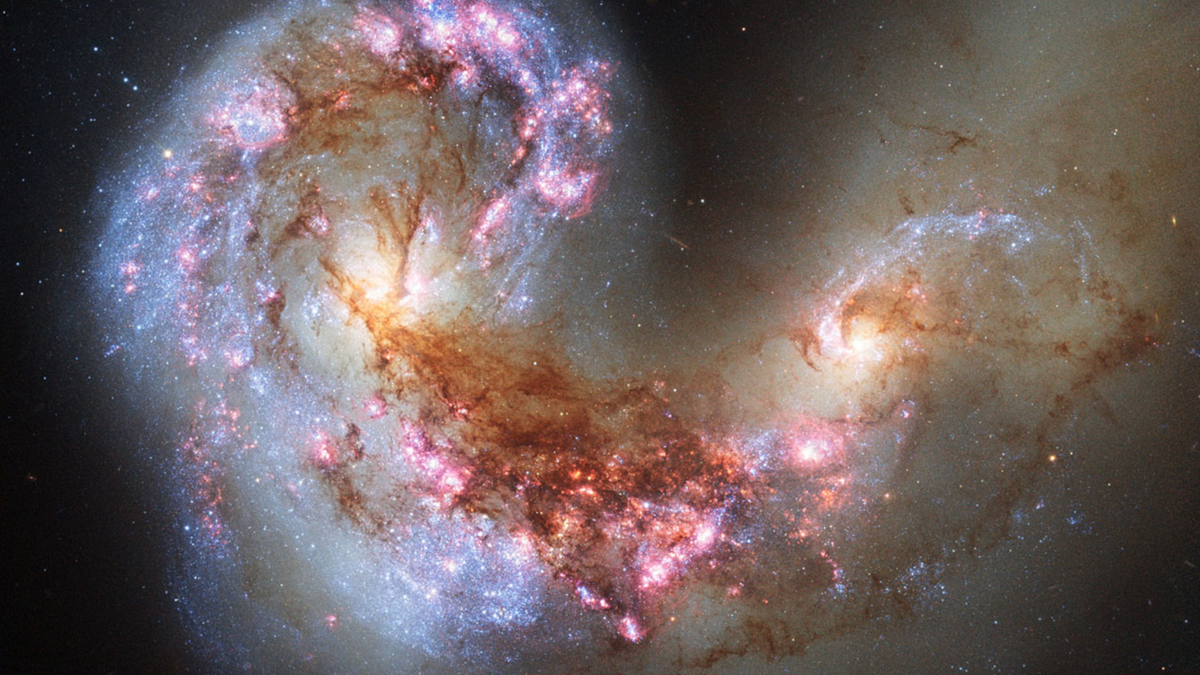
Typical spiral galaxies rotate in an orderly fashion, with stars and gas following predictable paths. However, some galaxies exhibit extreme or chaotic motions that defy simple explanation. There are systems with stars orbiting in multiple planes, galaxies rotating unusually fast for their mass, and others that appear to have been violently disrupted by past interactions. These kinematic extremes provide insight into the role of mergers, tidal forces, and environmental effects in shaping galactic dynamics.
In dense environments such as galaxy clusters, gravitational interactions can strip gas and stars from galaxies, creating elongated streams and distorted shapes. Some galaxies are accelerated to extraordinary speeds, becoming cosmic runaways. These phenomena test models of gravity and motion on galactic scales and help astronomers understand how large-scale structure influences individual galaxies.
Early Universe Extremes: Galaxies That Formed Too Soon
Perhaps the most striking examples of extreme galaxies are those observed in the early universe. Thanks to powerful telescopes, astronomers have detected galaxies that formed when the universe was only a few hundred million years old. Some of these early galaxies are surprisingly massive, chemically evolved, and actively forming stars, seemingly too mature for their cosmic age.
These observations push against the limits of current cosmological models, which predict more gradual growth. The presence of heavy elements in such young galaxies implies that previous generations of stars must have formed and died rapidly, enriching the interstellar medium in record time. Studying these early extremes helps refine our understanding of the first stars, the reionization of the universe, and the initial stages of galaxy formation.
The Role of Extreme Galaxies in Testing Physics
Extreme galaxies are not merely curiosities; they are essential tools for testing the laws of physics under conditions unattainable on Earth. They allow scientists to observe gravity operating over vast distances, matter behaving at extreme densities, and energy being released on unimaginable scales. Discrepancies between observations and theoretical predictions often signal the need for new physics or revised assumptions.
For example, tensions in measurements of galaxy rotation curves and mass distributions have fueled debates about the nature of dark matter and alternative theories of gravity. Similarly, the rapid formation of massive galaxies and black holes challenges models of cosmic evolution rooted in the standard framework of cosmology. Each extreme galaxy acts as a stress test, revealing where existing theories succeed and where they fall short.
Conclusion: Beyond the Limits, Toward Deeper Understanding
The most extreme galaxies ever observed represent the outer boundaries of what the universe can produce. From colossal giants and blindingly luminous systems to ghostly dark matter-dominated galaxies and ancient structures formed near the dawn of time, these objects expand our understanding of cosmic possibilities. Rather than breaking the laws of physics, they illuminate their flexibility and complexity, revealing how nature operates under the most intense conditions.
As observational technology continues to advance, even more extreme galaxies are likely to be discovered, pushing the limits further still. Each new finding refines our understanding of the universe and our place within it. By studying galaxies at the edge of the possible, humanity moves closer to answering some of the deepest questions about matter, energy, and the origins of cosmic structure.