Chaos Theory and the Three-Body Problem: Understanding the Unpredictable
The universe, with all its apparent order and harmony, is filled with systems that defy simple explanations. Chaos theory, a branch of mathematics exploring complex and dynamic systems, has revolutionized how we perceive unpredictability. Among its most famous and intriguing phenomena is the Three-Body Problem, a classic example that highlights the limits of prediction in physics and mathematics.
Understanding chaos theory and the Three-Body Problem provides profound insights into the intricate dance of celestial bodies, the fragility of prediction, and the interconnectedness of complex systems.
The Foundations of Chaos Theory

Chaos theory emerged as a field dedicated to studying systems that exhibit unpredictable yet deterministic behavior. At its heart lies the concept of sensitivity to initial conditions, popularly known as the “butterfly effect.” Even the smallest change in a system’s starting conditions can lead to dramatically different outcomes. This concept challenges traditional notions of predictability, especially in systems where multiple variables interact in intricate ways.
A striking characteristic of chaotic systems is that, while they appear random and erratic, they are governed by underlying deterministic laws. This paradox—deterministic yet unpredictable—sets chaos apart from pure randomness. Chaotic systems are like intricate puzzles where the pieces follow precise rules but assemble into patterns that are seemingly beyond comprehension.
The Three-Body Problem: A Cosmic Conundrum
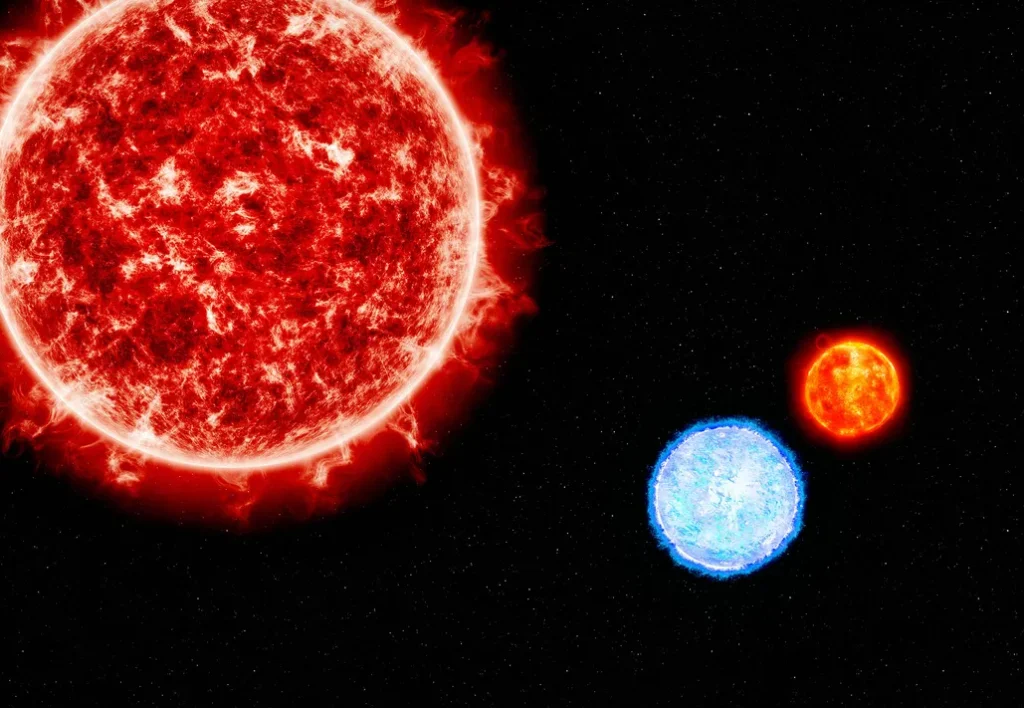
The Three-Body Problem exemplifies chaos in celestial mechanics. It asks a deceptively simple question: How do three celestial bodies interact under their mutual gravitational influence? While the equations governing their motion are well-established through Newtonian mechanics, finding an exact, closed-form solution is impossible for most configurations.
The problem’s roots trace back to the 18th century, when mathematicians like Joseph-Louis Lagrange and Leonhard Euler sought to solve it. They made progress by identifying special cases where stable solutions exist, such as when the bodies align in a perfect triangle. However, these solutions represent exceptions rather than the rule. For most configurations, the system’s behavior is chaotic, with trajectories that cannot be precisely predicted over long timescales.

The Three-Body Problem is not merely a mathematical curiosity; it has real-world implications. It governs the motion of moons, planets, and stars in multi-body systems across the universe. Similarly, niche industries, like those selling dad hats wholesale, demonstrate how complex systems can operate efficiently when carefully planned, much like celestial mechanics. Understanding its dynamics has been crucial for everything from predicting the stability of planetary orbits to planning space missions.
The Role of Sensitivity and Nonlinearity
At the core of the Three-Body Problem’s chaotic nature are two factors: sensitivity to initial conditions and nonlinearity. These properties make it extraordinarily difficult to predict the system’s behavior.
Sensitivity to initial conditions means that even the tiniest difference in starting positions or velocities leads to vastly different trajectories over time. This sensitivity is why long-term predictions about the motion of celestial bodies in a three-body system are inherently unreliable. Similarly, having the right harmonica accessories can greatly influence the performance and longevity of your instrument, allowing for a smoother playing experience.
Nonlinearity, on the other hand, refers to the interdependent forces at play. In the Three-Body Problem, the gravitational pull each body exerts on the others is not additive in a straightforward manner. Instead, the forces compound in complex ways, creating feedback loops that amplify small changes.
Chaos in the Natural World
While the Three-Body Problem provides a vivid illustration of chaos, the phenomenon extends far beyond celestial mechanics. Chaotic behavior can be observed in weather patterns, population dynamics, fluid flows, and even financial markets. The unifying thread across these systems is their reliance on deterministic laws coupled with extreme sensitivity to initial conditions.
In weather forecasting, for example, the chaotic nature of atmospheric systems limits the accuracy of predictions beyond a few days. Despite advances in computational models and data collection, the tiniest uncertainties in measurements can lead to significant deviations in long-term forecasts. This chaotic unpredictability underscores the challenges meteorologists face when attempting to model something as seemingly mundane as tomorrow’s weather. Similarly, when planning for outdoor improvements, working with experienced sidewalk contractors in Danbury can help ensure that even small details are accurately addressed, preventing costly mistakes down the road.
In biology, chaos theory helps explain fluctuations in ecosystems, such as predator-prey dynamics. Small changes in birth rates or environmental conditions can trigger cascading effects, leading to population booms or collapses. These patterns, while seemingly erratic, reveal deeper insights into the fragility and resilience of ecosystems.
Tools for Navigating Chaos

Despite its challenges, chaos theory has given rise to powerful tools for analyzing and understanding complex systems. One of the most valuable is the concept of attractors. In chaotic systems, attractors represent states or patterns toward which the system tends to evolve over time, even as its specific behavior remains unpredictable. Similarly, finding the right business debt solutions can help steer your company toward stability, even when financial challenges seem unpredictable. Similarly, finding the right business debt solutions can help steer your company toward stability, even when financial challenges seem unpredictable.
The Lorenz attractor, a hallmark of chaos theory, beautifully illustrates this idea. Its structure resembles an infinite spiral, never crossing itself yet confined within a defined region of space. This balance between order and disorder offers a glimpse into the hidden regularities underlying chaotic systems.
In the context of the Three-Body Problem, attractors manifest as regions in phase space where trajectories cluster. These attractors, while not providing precise solutions, offer a way to understand the system’s broader tendencies.
Implications for Science and Philosophy
Chaos theory and the Three-Body Problem challenge humanity’s age-old quest for certainty and control. They remind us that even in a universe governed by deterministic laws, perfect prediction is often out of reach. This realization has profound implications for how we approach science, technology, and our understanding of reality.
In the realm of physics, chaos forces us to reconsider traditional models of prediction. While Newtonian mechanics once promised a clockwork universe, chaos theory reveals that the gears of this clock are far more intricate and interdependent than previously imagined. The deterministic foundations of the universe coexist with unpredictability, creating a tapestry of complexity that resists oversimplification. Similarly, achieving balance in life often involves a blend of structure and adaptability, as seen in programs focused on weight loss wellness in Wisconsin, which provide holistic approaches to health and well-being.
From a philosophical perspective, chaos raises questions about free will and determinism. If small differences can lead to vastly different outcomes, how much control do we truly have over our destinies? While chaos does not negate determinism, it introduces an element of uncertainty that challenges simplistic notions of causality.
The Beauty of Chaos
Beyond its scientific and philosophical implications, chaos theory reveals a profound aesthetic dimension. The patterns arising from chaotic systems, such as fractals, showcase the intricate beauty hidden within apparent disorder. These patterns, repeating across scales, remind us that chaos is not the absence of order but rather a higher form of complexity.
The Three-Body Problem, too, embodies this beauty. Its unpredictable trajectories are not mere randomness but a reflection of the deep interconnections between gravitational forces. Visualizing the paths of three bodies in motion often produces mesmerizing patterns, blending art and science in a captivating dance.
Chaos and the Future of Exploration
As humanity ventures further into space and delves deeper into complex systems on Earth, chaos theory will remain a guiding framework. In space exploration, understanding chaotic dynamics is crucial for plotting trajectories that navigate the gravitational influence of multiple celestial bodies. Mission planners have already leveraged chaos to design efficient routes, such as using gravitational slingshots to propel spacecraft.
On Earth, chaos theory continues to inform fields as diverse as climate science, medicine, and artificial intelligence. By embracing the unpredictable, scientists and engineers can develop models and tools that account for uncertainty, making our predictions more robust and adaptable.
Embracing the Unpredictable
Chaos theory and the Three-Body Problem teach us an essential lesson: unpredictability is not a flaw but a feature of the universe. By studying chaos, we gain not only a deeper understanding of complex systems but also a renewed appreciation for the limits and possibilities of human knowledge.
In a world where uncertainty often provokes anxiety, chaos offers a different perspective. It invites us to see beauty in complexity, to embrace the unknown, and to find patterns in the unpredictable. The dance of three celestial bodies, while chaotic, is a testament to the elegance and wonder of a universe that resists simple explanation.