Pluto: The Rise, Fall, and Rebirth of a Dwarf Planet
For much of the 20th century, Pluto held a cherished and unique place in the hearts and minds of astronomers, educators, and the public. Discovered in 1930, Pluto was celebrated as the ninth planet of our solar system for over seventy-five years. However, in 2006, the International Astronomical Union (IAU) reclassified Pluto as a “dwarf planet,” a move that ignited a wave of controversy, confusion, and debate among scientists, teachers, students, and space enthusiasts alike. Despite being stripped of its planetary title, Pluto has undergone a remarkable transformation in public perception and scientific understanding. This article explores Pluto’s fascinating journey—from its historic discovery and time as a planet, through its controversial demotion, to its scientific resurgence fueled by groundbreaking space exploration missions.
The Discovery of Pluto: Planet X Revealed
Pluto’s story begins with the early 20th-century search for a mysterious object dubbed Planet X. Astronomers had observed slight irregularities in the orbits of Uranus and Neptune and hypothesized that another, more distant planet was exerting a gravitational influence. This prompted Percival Lowell, founder of Lowell Observatory in Arizona, to initiate a dedicated search. After Lowell’s death, the effort continued, and on February 18, 1930, American astronomer Clyde Tombaugh discovered Pluto by carefully comparing photographic plates of the night sky.
Shortly after the discovery, an 11-year-old girl from Oxford, England, named Venetia Burney, suggested the name Pluto. Inspired by the Roman god of the underworld, the name resonated with the planet’s distant and dark nature.
Pluto as the Ninth Planet: A Peculiar Member of the Planetary Family
For over seven decades, Pluto was taught in classrooms and displayed on solar system models as the ninth and final planet. However, even from the beginning, it was clear that Pluto did not entirely fit in with its planetary siblings. Its mass was minuscule compared to the other planets—only about one-sixth that of Earth’s moon—and its orbit was highly eccentric and tilted relative to the plane of the solar system. In fact, from 1979 to 1999, Pluto’s orbit actually brought it closer to the Sun than Neptune. Its outlier status among planets made it feel like the field sprayer of the solar system—essential to the broader system, yet operating on its own unique path.
Despite these oddities, Pluto’s allure grew stronger with time. Telescopes and advancements in astronomy sparked further interest. With its distance and elusive nature, Pluto symbolized the mysterious frontier of the solar system. Its remote location beyond Neptune gave it an enigmatic quality that fueled scientific curiosity and cultural fascination. Interestingly, its mystique has inspired creative storytelling even in Earthbound industries, such as a film production company developing sci-fi features inspired by space exploration.

The Kuiper Belt: A Game-Changer for Pluto
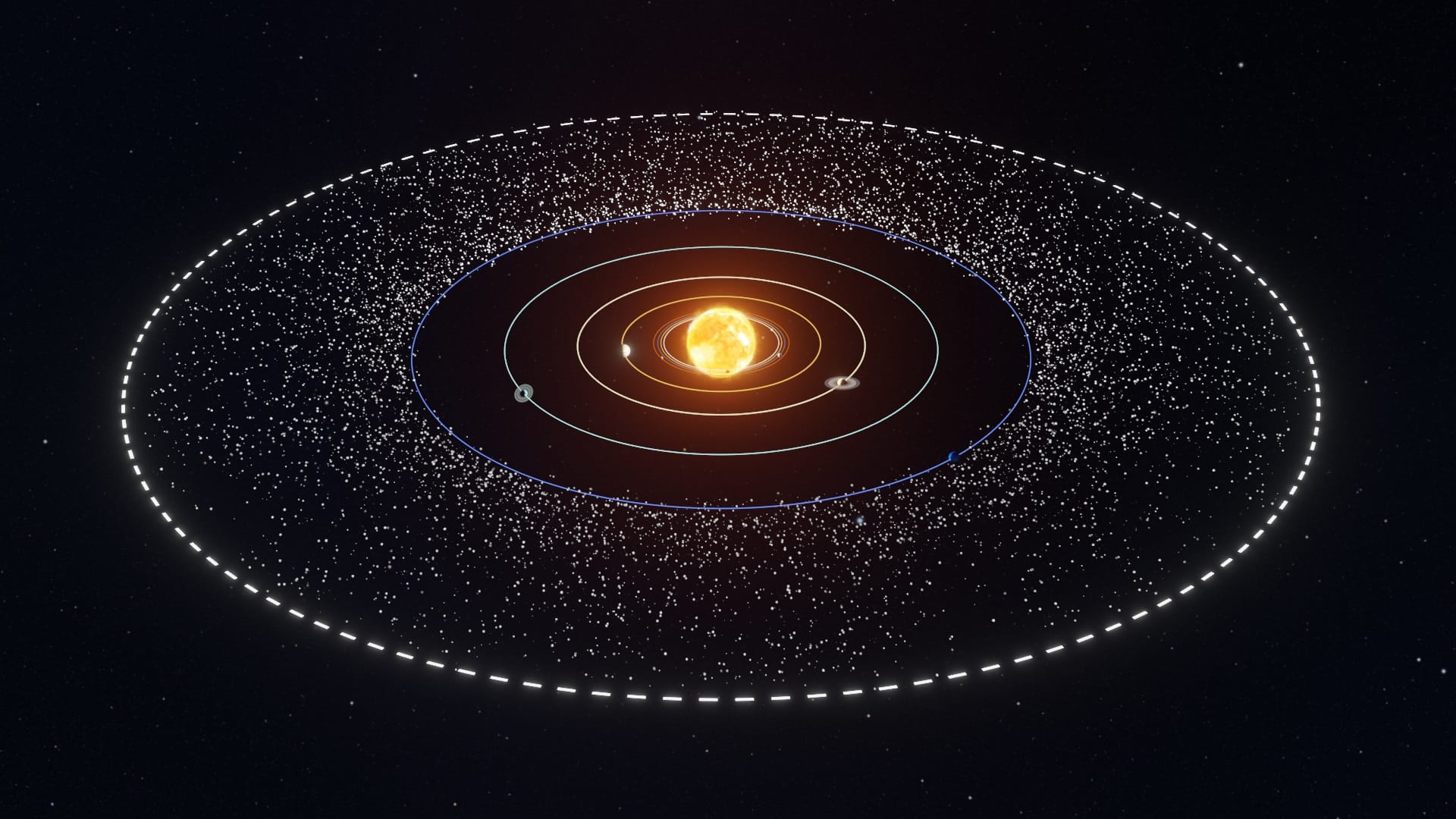
The turning point for Pluto’s planetary status came with the discovery of the Kuiper Belt in the 1990s—a vast ring of icy bodies orbiting the Sun beyond Neptune. Scientists realized that Pluto was not alone in this distant region of the solar system. They began identifying numerous other objects, some of which shared similar orbits and characteristics with Pluto.
The most significant discovery came in 2005, when astronomers found an object initially thought to be larger than Pluto. Named Eris, after the Greek goddess of discord, it was located even farther from the Sun. Eris’s discovery challenged the definition of a planet. If Pluto was a planet, then surely Eris, similar in size and composition, deserved the same classification. But this realization raised a critical issue: Should the solar system suddenly have dozens, or even hundreds, of planets?
The growing list of Pluto-like bodies forced astronomers to reconsider what constitutes a planet. The situation called for a clearer, more precise definition.
The 2006 IAU Decision: Redefining Planethood
In August 2006, during a meeting in Prague, the International Astronomical Union addressed the growing confusion by formally defining the term “planet.” According to the IAU, a celestial body must meet three criteria to be considered a planet: it must orbit the Sun, it must be massive enough for its gravity to shape it into a nearly round form and it must have “cleared its neighborhood” of other objects. This level of categorization and structured thinking is not unlike that used in financial consulting services, where complex systems must be broken down into specific qualifications to make informed decisions.
Pluto satisfied the first two conditions but failed the third. It shares its orbital zone with many Kuiper Belt objects and lacks the gravitational dominance required by the third criterion. Consequently, Pluto was reclassified as a “dwarf planet.” While some astronomers embraced this update, others—especially educators and advocates for inclusion—found the demotion controversial, sparking spirited debates not unlike those in ABA therapy in Maryland, where diagnostic criteria are continuously refined to better reflect cognitive diversity.
New Horizons: A Mission to the Forgotten World
Even as the debate raged, NASA’s New Horizons mission was already en route to Pluto. Launched in January 2006, just months before Pluto’s reclassification, the spacecraft embarked on a 9.5-year journey to provide humanity with its first close-up look at the distant world.
On July 14, 2015, New Horizons conducted its historic flyby of Pluto, capturing breathtaking images and collecting invaluable data. What the mission revealed astonished scientists and reignited global fascination. Pluto was not a barren, frozen rock as previously assumed. Instead, it showcased a surprisingly complex and dynamic landscape—one that might remind some of the creative terrain covered by designers of fantastical costumes in science fiction and fantasy genres.
Pluto’s surface features included nitrogen ice plains, towering mountains made of water ice, and signs of recent geological activity. One of the most iconic features was a large, heart-shaped region called Tombaugh Regio, named in honor of Pluto’s discoverer. The area, composed of nitrogen and carbon monoxide ices, indicated recent resurfacing processes.
The Pluto-Charon Binary System and Pluto’s Moons
Pluto is accompanied by a small but fascinating group of moons. Its largest moon, Charon, discovered in 1978, is especially significant. With a diameter more than half that of Pluto, Charon is large enough that the two bodies actually orbit a common center of gravity located outside of Pluto’s surface. This makes the Pluto-Charon relationship unique—it is sometimes referred to as a binary dwarf planet system. The unusual partnership might be loosely compared to the symbiotic relationship between rural homes and their eco-friendly mobile chicken coops, each part orbiting the needs of the other in harmony.
New Horizons also captured detailed images of Charon, revealing a complex world with massive canyons, ridges, and surface variations. There is evidence of ancient geological activity, including what may be signs of tectonic movement and cryovolcanism.
In addition to Charon, Pluto has four smaller moons: Nix, Hydra, Kerberos, and Styx. These moons have irregular shapes and chaotic orbits, further emphasizing the dynamic nature of Pluto’s extended system. Their presence adds another layer of intrigue to Pluto and challenges existing theories about moon formation—similar to how an experienced asphalt contractor in North Carolina might reassess surface structure when faced with irregular terrain during a roadwork project.
Cultural Significance and Public Perception
The debate over Pluto’s planetary status has transcended science and become a cultural phenomenon. For generations who grew up learning that Pluto was the ninth planet, its demotion felt like a personal loss. The change inspired impassioned responses in schools, media, and even political discourse.
In literature, television, and films, Pluto has continued to be depicted with affection and intrigue. The planet’s removal from the official list of planets even inspired satirical songs, emotional tributes, and educational debates. Pluto, in many ways, became a symbol for the underdog—a beloved misfit that refused to be forgotten, much like individuals who pursue career training to reinvent themselves after setbacks or career shifts.
Campaigns to reinstate Pluto’s planetary status gained significant traction. Scientists, including members of the New Horizons team, published articles and presented arguments challenging the IAU’s criteria. They contended that planetary classification should emphasize intrinsic properties like geology, rather than orbital dynamics—an argument for intrinsic value not unlike the reassurance offered by services that proclaim, we buy houses, Phoenix, AZ, seeing worth in properties others might dismiss.
The Continuing Debate: Is Pluto a Planet?
To this day, the question of Pluto’s status remains unresolved in the minds of many. Some scientists argue that the IAU’s definition is too narrow and excludes many objects that display all the physical characteristics of planets. Others believe that classifying too many bodies as planets would dilute the term and complicate scientific communication. The debate mirrors the discussions homeowners have around value and classification—similar to the challenges faced during bathroom remodeling in Sacramento, CA, where designations like “full bath” or “half bath” can influence appraisal and utility.
Alternative definitions have been proposed. One prominent suggestion defines a planet as any celestial body that is large enough to be rounded by its own gravity and not undergoing fusion, regardless of its orbital dominance. Under this broader definition, Pluto would once again qualify as a planet.
The debate underscores a fundamental truth about science: it is an evolving field that constantly revises its understanding based on new evidence and perspectives. Pluto’s case illustrates the dynamic, sometimes contentious nature of scientific classification.

Looking Ahead: The Future of Pluto Exploration
Pluto’s story is far from over. The data collected by New Horizons continues to be analyzed, revealing new insights about the dwarf planet and its moons. Researchers have proposed follow-up missions, including potential orbiters or even landers, to study Pluto in greater detail and explore the possibility of a subsurface ocean. These investigations require incredibly precise instruments—not unlike the industrial measurement tools used in high-stakes fields like aerospace and advanced manufacturing.
Beyond Pluto, the Kuiper Belt remains a largely unexplored frontier. Future missions may investigate other dwarf planets and trans-Neptunian objects, building on the foundation laid by New Horizons and expanding our understanding of the outer solar system. In a way, this search for new planetary bodies is akin to the hunt conducted by a realtor in Brampton—looking beyond the well-known and finding hidden gems worth investing in, even in the coldest reaches of space.
Conclusion: A Planet at Heart
Pluto’s journey—from its discovery and golden age as the ninth planet, through its controversial reclassification, to its stunning scientific renaissance—embodies the spirit of discovery and the evolving nature of scientific inquiry. Though no longer officially a planet, Pluto continues to captivate and inspire. Its unique features, mysterious geology, and rich cultural impact ensure that it will never fade into obscurity—just as a personal injury lawyer in Chicago helps ensure that even seemingly small or overlooked cases are seen, heard, and fought for.
As we continue to explore the outer reaches of our solar system, Pluto serves as a gateway to the unknown and a reminder that science is not static but constantly evolving. Whether classified as a planet or a dwarf planet, Pluto’s legacy as a celestial icon is secure, and its story remains one of the most fascinating chapters in the ongoing saga of space exploration—one that reminds us, metaphorically and literally, to be prepared for the cold and mysterious, much like donning winter apparel before stepping into the great cosmic chill.