The Chemical Evolution of Galaxies: How the Elements of Life Are Forged Across Time
Introduction: From Darkness to Diversity
When the universe was born nearly 13.8 billion years ago, it was a remarkably simple place. In the first few minutes after the Big Bang, only the lightest elements—hydrogen, helium, and a trace of lithium—were created. There were no carbon atoms to build life, no oxygen to fill future atmospheres, and no iron to form planetary cores. Yet today, galaxies like our Milky Way are rich in complex elements that make stars, planets, oceans, and living organisms possible.
The story of how this transformation occurred is known as the chemical evolution of galaxies. It is the long cosmic process through which generations of stars create, recycle, and spread elements throughout interstellar space. This process connects the smallest parts of matter to the largest structures in the universe, showing that every atom in our bodies has a deep and ancient stellar history.
The First Elements and the Birth of Structure
In the immediate aftermath of the Big Bang, the universe cooled rapidly as it expanded. During this cooling, protons and neutrons combined through nuclear reactions to form the first atomic nuclei, a process called Big Bang nucleosynthesis. The result was a universe dominated by hydrogen, with smaller amounts of helium and tiny traces of lithium and beryllium.
For hundreds of thousands of years, the universe remained hot and opaque, filled with a glowing plasma. When it cooled enough for electrons to attach to nuclei, neutral atoms formed and light could finally travel freely. This era, called recombination, left behind the cosmic microwave background radiation, which we still observe today.
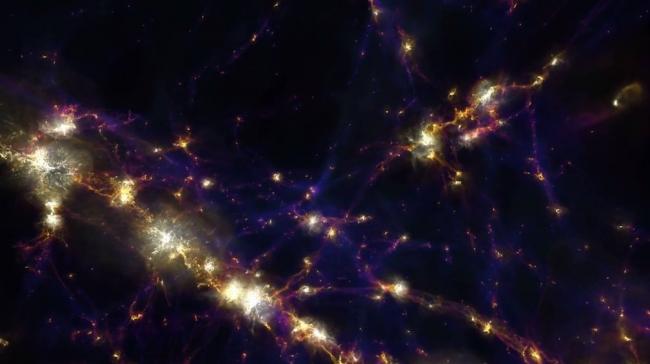
Over time, gravity began pulling together slight density variations in this early gas. These clumps grew into the first stars and proto-galaxies. However, the earliest stars formed from pristine material, containing no heavy elements at all. These are known as Population III stars, and they represent the first major engine of chemical change in the universe.
The Role of the First Stars
Population III stars were very different from most stars we see today. Because their gas lacked cooling agents such as carbon and oxygen, they tended to be very massive, often hundreds of times heavier than the Sun. Their immense mass led to extremely high temperatures and pressures in their cores.
Inside these stars, nuclear fusion began converting hydrogen into helium, and eventually helium into heavier elements like carbon and oxygen. This process, known as stellar nucleosynthesis, is responsible for the creation of many elements up to iron. These first stars lived short, violent lives, ending in powerful supernova explosions.
When they exploded, they released the newly formed elements into the surrounding space. This enriched the interstellar medium—the gas and dust between stars—with heavier elements, planting the seeds for future generations of stars, planets, and complex chemistry.
Supernovae and the Creation of Heavy Elements
While stars can produce elements up to iron through fusion, elements heavier than iron require a different process. This is because fusing iron does not release energy; instead, it consumes it. The solution lies in extreme cosmic events such as supernova explosions and neutron star mergers.
In a core-collapse supernova, a massive star runs out of nuclear fuel and its core collapses under gravity. Neutrons are packed tightly together, and the surrounding layers rebound violently outward. During this explosion, conditions become so intense that rapid neutron capture occurs, known as the r-process. This forms many heavy elements, including gold, uranium, and platinum.
More recently, scientists have confirmed that neutron star mergers also play a critical role in creating heavy elements. When two neutron stars collide, they eject material rich in neutrons into space, leading to large amounts of r-process element formation. This discovery has reshaped our understanding of how some of the rarest elements in the periodic table are produced.
Galactic Recycling: The Life Cycle of Matter
Galaxies are not chemically static. Instead, they represent gigantic recycling systems where matter continuously moves through different phases. Gas collapses to form new stars, stars synthesize elements, and then return enriched material back into the interstellar medium when they die.
Low and medium-mass stars, such as the Sun, end their lives by shedding their outer layers and forming planetary nebulae. They release elements like carbon, nitrogen, and oxygen into space. Over billions of years, this slow but steady process adds to the chemical richness of galaxies.
The interstellar medium becomes increasingly enriched with heavy elements as each new generation of stars is formed. Astronomers describe stars with higher metal content as metal-rich, even though in astronomy, “metals” refer to all elements heavier than helium. Younger stars, including our Sun, contain far more heavy elements than the ancient stars formed in the early universe.
The Rise of Complex Chemistry and Molecular Clouds
As galaxies evolve chemically, they develop regions where gas and dust can cool efficiently. This cooling allows dense molecular clouds to form, which are the birthplaces of new stars and planetary systems.
In these cold environments, atoms combine to form molecules, including water, carbon monoxide, ammonia, and complex organic compounds. Dust grains, composed of silicates, carbon, and ice, act as catalysts for many of these reactions. Over time, increasingly complex molecules form, some of which are considered the building blocks of life.
The presence of heavier elements is crucial for this molecular complexity. Without carbon, oxygen, nitrogen, phosphorus, and sulfur, life as we know it could not exist. The chemical evolution of galaxies is therefore directly tied to the potential for habitability.
The Role of Galactic Structure and Dynamics
The distribution of elements within a galaxy is not uniform. Spiral galaxies like the Milky Way often show metallicity gradients, with more heavy elements found closer to their centers. This is because star formation tends to be more intense in these regions, leading to greater chemical enrichment over time.
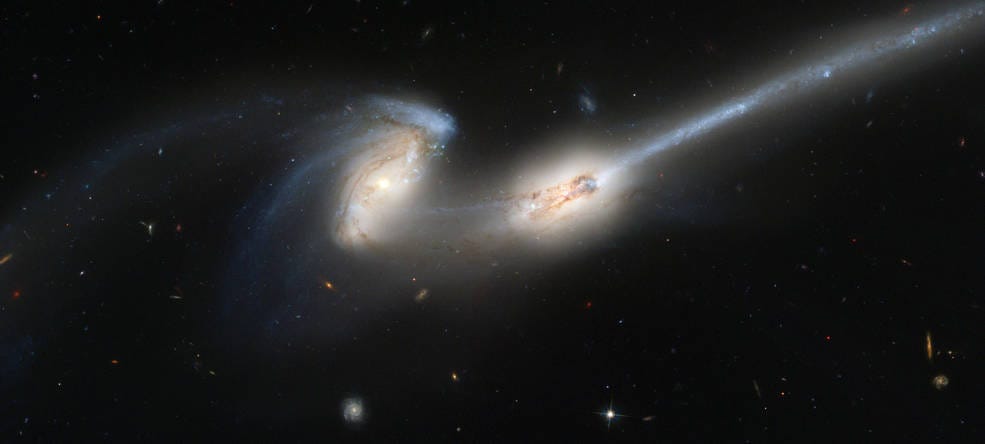
Interactions between galaxies also influence chemical evolution. When galaxies collide or merge, their gas is stirred, compressed, and redistributed. These events often trigger bursts of star formation, accelerating the production and spread of heavy elements.
Galactic winds, driven by supernovae and active galactic nuclei, can also push enriched gas out of galaxies and into intergalactic space. This means that chemical evolution extends beyond galaxy boundaries, contributing to the enrichment of the cosmic web itself.
Observing Chemical Evolution Across Cosmic Time
Astronomers study the chemical evolution of galaxies by analyzing the light from stars, gas clouds, and distant galaxies. Spectroscopy allows scientists to identify specific elements based on their unique spectral lines. By examining old stars and faraway galaxies, researchers can observe how elemental abundances change over time.
Distant galaxies, whose light has taken billions of years to reach us, act as windows into the early universe. By studying them, astronomers can track how quickly elements like carbon and oxygen became common after the first stars formed.
In our own galaxy, extremely old stars with low metallicity serve as living fossils. Their chemical compositions preserve clues about the conditions of the early Milky Way, providing insight into the earliest stages of galactic evolution.
The Connection to Life and Planet Formation
The chemical evolution of galaxies is not just an abstract cosmic story; it is directly linked to our existence. Planets form from disks of gas and dust around young stars, and these disks are made from material enriched by previous generations of stars.
Rocky planets like Earth require elements such as iron, silicon, magnesium, and oxygen. The presence of water relies on hydrogen and oxygen, while life depends on complex chemistry built from carbon, nitrogen, and other heavier elements. None of these would exist without billions of years of stellar processing.
A Universe Still in Progress
Despite the incredible complexity already achieved, the chemical evolution of galaxies is far from over. Stars are still forming, supernovae are still exploding, and heavy elements are still being created and dispersed. Every new generation of stars slightly alters the chemical makeup of its galaxy.
In the distant future, star formation will slow as gas supplies are depleted or expelled. Eventually, galaxies will become dominated by aging stars and stellar remnants. Yet even then, the chemical elements created over cosmic history will remain, forming the final legacy of billions of years of stellar alchemy.
Conclusion: Stardust and Time
The chemical evolution of galaxies is one of the most profound narratives in science. It tells how a universe born with only the simplest elements gradually gave rise to the rich chemical diversity required for planets, oceans, and life.
Every carbon atom in your cells was forged in the heart of a dying star. Every iron atom in your blood was once part of a supernova explosion. We are not separate from the cosmos; we are products of its long chemical history.
In understanding how galaxies evolve chemically across time, we also learn something deeply meaningful about ourselves. We are, quite literally, made of stardust shaped by cosmic time, living in a universe that has been patiently preparing the elements of life for billions of years.