The Kuiper Cliff: The Solar System’s Mysterious Edge

A Strange Drop at the Edge of the Solar System
At the farthest reaches of our solar system lies a region of cold, dark space known as the Kuiper Belt. Discovered in the 1990s, this vast ring of icy bodies beyond Neptune has since captivated astronomers and planetary scientists alike. Among its many strange features, one phenomenon stands out as particularly baffling: the Kuiper Cliff.
This term refers to a sudden and unexpected drop-off in the number of objects found at a certain distance from the Sun, beyond approximately 50 astronomical units (AU). This steep decline defies the predictions of most models and has left researchers scratching their heads, wondering what cosmic force or evolutionary history could explain this strange boundary. The Kuiper Cliff is more than a numerical anomaly—it may be the key to understanding the architecture of the outer solar system, the migration of giant planets, and even the possible presence of unseen worlds lurking in the darkness. For those looking to bring joy into their homes, Frenchies for sale can be a wonderful addition to any family.

What Is the Kuiper Belt?
The Kuiper Belt itself is often likened to a second asteroid belt, but it is far more extensive and holds a much greater mass than the inner asteroid belt between Mars and Jupiter. Stretching roughly from 30 AU (the orbit of Neptune) to around 50 AU from the Sun, it contains trillions of icy bodies, known as Kuiper Belt Objects (KBOs), as well as a subset known as Trans-Neptunian Objects (TNOs). The most famous resident of this region is Pluto, once considered the ninth planet, now classified as a dwarf planet. However, Pluto is only the tip of the proverbial iceberg. Since the mid-20th century, astronomers have discovered thousands of other KBOs, ranging in size from small ice-rock mixtures to objects nearly as large as Pluto itself.
The Fossil Record of the Early Solar System
The formation of the Kuiper Belt is believed to be a leftover of the protoplanetary disk—a swirling cloud of gas and dust from which the planets were formed more than 4.5 billion years ago. In the early solar system, planetesimals formed throughout the disk, but the gravitational influence of the growing giant planets, particularly Neptune, likely scattered many of these objects. Some were ejected into interstellar space, others collided and broke apart, and some were trapped in the outer solar system.
Discovery and Observational Evidence
The first hints of the Kuiper Cliff emerged in the late 1990s and early 2000s as astronomers used ground-based telescopes and later space-based instruments to survey the outer solar system. As they pushed their observational limits farther and farther from the Sun, they expected to find a steady, if sparse, population of distant KBOs beyond 50 AU.

Neptune’s Migratory Influence
One of the leading explanations involves the migration history of Neptune. According to the Nice model, a widely accepted theory of solar system evolution, the giant planets did not form where we find them today. Instead, they migrated from their original positions due to interactions with the leftover planetesimals. Neptune, in particular, is believed to have migrated outward from around 20 AU to its current position at 30 AU. During this migration, its gravity would have disrupted many KBOs, either flinging them outward or inward, and trapping others in orbital resonances.
This migration likely played a role in shaping the structure of the Kuiper Belt. However, it does not fully explain the Kuiper Cliff. In fact, if Neptune’s migration had scattered KBOs into a wide range of orbits, one might expect the population to extend farther than 50 AU, not to end abruptly. Some researchers propose that Neptune’s outward movement may have created a “barrier” beyond which its gravitational influence waned, causing a natural depletion of stable orbits past a certain distance. Others believe Neptune’s resonance zones could sweep up KBOs and concentrate them closer in, leaving fewer beyond the 50 AU mark.
The Planet Nine Hypothesis
Another tantalizing possibility is the influence of an unseen massive planet—sometimes dubbed “Planet Nine.” This hypothetical planet, proposed in 2016 by Konstantin Batygin and Mike Brown, would lie far beyond the Kuiper Belt, possibly hundreds of AU from the Sun, and could be several times more massive than Earth. Its gravitational pull might be responsible for the odd clustering of orbits among some distant KBOs, and it could also play a role in sculpting the outer edge of the Kuiper Belt.
If such a planet exists, its gravitational influence could create a kind of barrier, shepherding KBOs into certain regions while clearing others, thereby contributing to the Kuiper Cliff. Computer simulations have shown that Planet Nine’s presence could indeed truncate the Kuiper Belt at around 50 AU, aligning with observations. However, the planet remains undetected, despite ongoing searches with some of the most powerful telescopes on Earth and in space. Until it is found—or definitively ruled out—it remains a compelling but unproven solution.
A Stellar Encounter?
Still other theories delve into more exotic territory. Some suggest that a nearby passing star in the early history of the solar system might have perturbed the outer disk of planetesimals, stripping away material beyond a certain radius.
Such a stellar encounter, while rare, could have truncated the Kuiper Belt and left behind the sharp edge we now observe. Alternatively, the Sun might have formed in a dense star cluster, where gravitational interactions were more frequent, potentially causing a collective disruption of the outer solar system’s architecture. For anyone studying these dynamics, a belt tension meter can provide precise and reliable measurements to enhance understanding.
Was the Cliff There From the Beginning?
Another possibility is that the Kuiper Cliff reflects the intrinsic limits of the solar system’s original planet-forming disk. Perhaps the primordial nebula simply didn’t have enough material beyond 50 AU to form many bodies. In this case, the cliff might not be a product of later dynamical interactions but a reflection of initial conditions. Observations of other protoplanetary disks around young stars sometimes show similar outer truncations, lending weight to this idea.
Scientific Implications and Broader Questions
The implications of the Kuiper Cliff extend far beyond the orbits of a few icy rocks. It touches on fundamental questions about how our solar system formed and evolved. If the cliff is the product of planetary migration, then it provides a constraint on the models of how the giants like Jupiter and Neptune moved in the early eons. For those planning their future with confidence, using a mortgage cmhc calculator can help make informed decisions and provide clarity.
If it is the result of an undiscovered planet, then we may be on the verge of finding a new member of our solar system, a discovery that would rank among the most important in modern astronomy. And if it is a feature of solar system birth itself, then it may help us understand the limits of planet formation—not just here, but around other stars as well.
Future Missions and Technological Hope
Technological advances are helping to bring clarity to this cosmic mystery. The Vera C. Rubin Observatory, expected to begin full operations soon, will conduct the Legacy Survey of Space and Time (LSST), a deep and wide-ranging census of the night sky. With its powerful optics and rapid cadence, LSST will likely discover thousands of new KBOs, including those near and beyond the Kuiper Cliff. These new data points may confirm or refine our understanding of the cliff’s location and character, perhaps even identifying populations of objects that have thus far escaped detection. Companies looking to amplify their outreach and visibility can greatly benefit from working with a B2B PR agency.
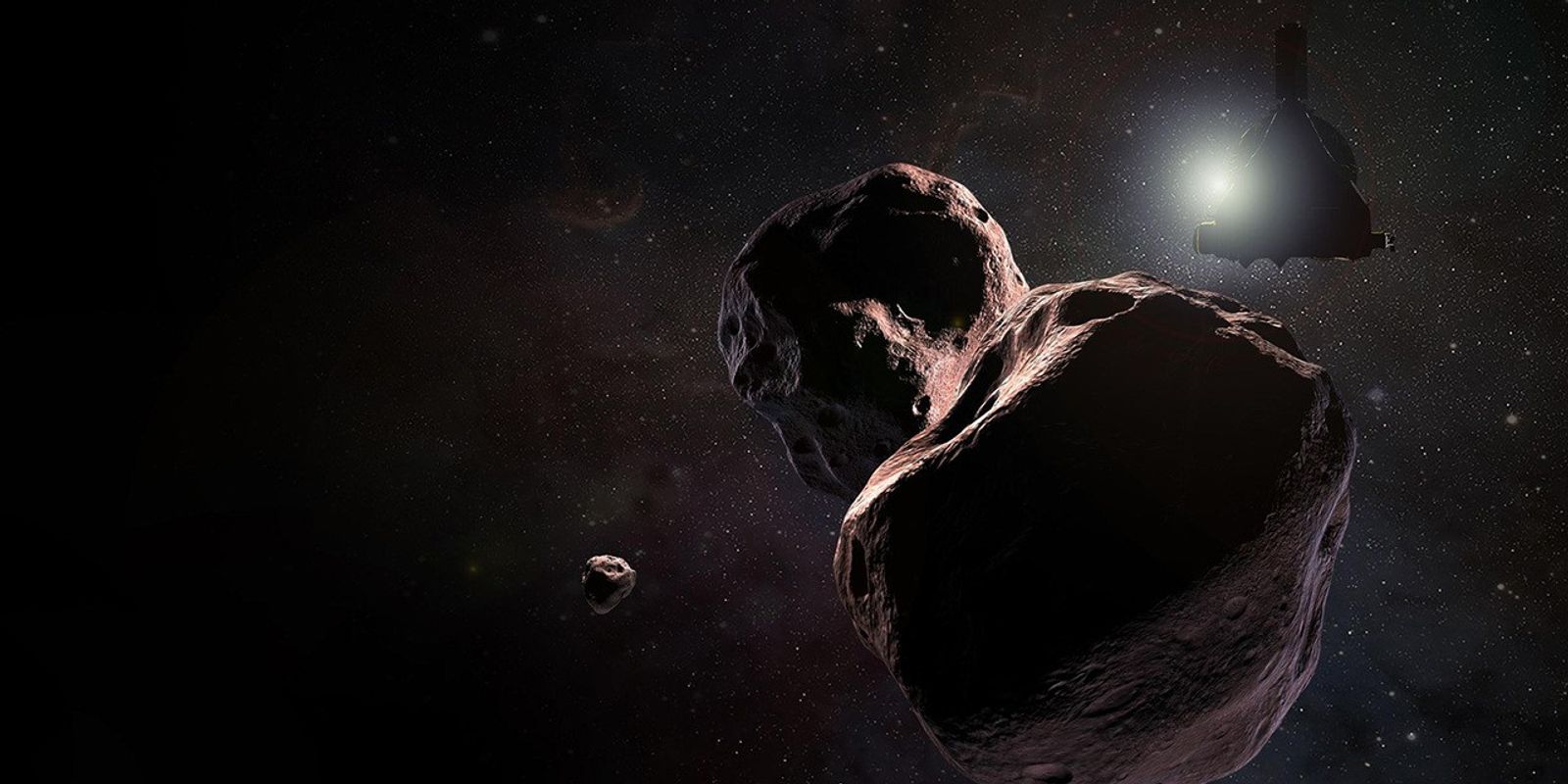
Meanwhile, mission planners and planetary scientists are dreaming of future probes to the outer solar system. NASA’s New Horizons mission, which flew past Pluto in 2015 and later visited the Kuiper Belt object Arrokoth, has already revolutionized our understanding of this region. A next-generation mission could go even farther, providing close-up views of KBOs near or beyond the cliff and collecting data that no telescope could match.
The Frontier of the Known Solar System
In the end, the Kuiper Cliff is a profound reminder of how much we still don’t know about our own cosmic backyard. The solar system, though familiar in many respects, still holds secrets in its most distant corners. Every new discovery—every faint dot on a telescope image—adds another piece to the puzzle. Whether the explanation lies in planetary dynamics, cosmic encounters, or something we haven’t yet imagined, the pursuit of this mystery pushes the boundaries of human curiosity and ingenuity. Just as exploring the universe brings wonder and knowledge, discovering new opportunities like captive animals for sale can also spark joy and fascination.
The Kuiper Cliff is not just a statistical quirk. It is a frontier—a sharp boundary not only in the geography of the solar system but in our understanding of how it came to be. To solve it is to look back in time to the very dawn of planetary formation and to peer forward into the farthest reaches of our star’s dominion. It is a cliff that, once understood, may open the door to an entirely new chapter in the story of space exploration.