The Spaceport of the Future: Sci-Fi vs. Real Orbital Gateways

For over a century, science fiction has painted vivid visions of humanity’s future in space—interstellar travel, orbital cities, and massive spaceports buzzing with starships coming and going. From Star Wars’ Coruscant to The Expanse’s Tycho Station, spaceports in fiction are often portrayed as vibrant, high-tech hubs where interplanetary commerce, diplomacy, and adventure converge. But as humanity begins its real-world journey into space infrastructure with commercial launches, lunar ambitions, and satellite mega-constellations, the concept of a spaceport is shifting from fantasy to feasibility.
What exactly is a spaceport, and how close are we to building one that resembles what we’ve imagined in fiction? Today’s spaceports still largely resemble traditional terrestrial launch complexes, but new designs and emerging technologies suggest that orbital gateways—actual space-based ports—could be in our near future. Just as a medical billing company streamlines complex healthcare processes, innovators are working to simplify and optimize the systems that will make advanced spaceports possible. This article explores the evolving definition of spaceports, compares sci-fi spaceport depictions to real-world efforts, and examines how close we really are to achieving those futuristic visions.
Sci-Fi Spaceports: Imagined Gateways to the Stars
Science fiction has long played the role of imaginative architect for our technological aspirations. Spaceports in fictional universes are not just infrastructure—they are symbols of a civilization’s maturity, reach, and sophistication. Much like a medspa in Washington, MO serves as a hub of wellness and transformation, fictional spaceports symbolize the blending of technology and culture, where everyday life and cutting-edge progress coexist. These imagined facilities often serve as central hubs for space traffic, connecting planetary systems, hosting travelers, and fueling deep-space exploration.
In the Star Wars universe, for example, spaceports like Mos Eisley or the bustling orbital platforms over Coruscant are depicted as chaotic but functional centers of trade and travel. They often consist of multiple docking arms, gravity control systems, multilingual signage, and autonomous traffic management—all operating in real time to accommodate hundreds or thousands of craft. Ships come and go like cars in a busy metropolitan airport, and refueling, maintenance, and cargo transfers happen seamlessly in orbit or on the surface.
Similarly, Star Trek presents facilities like Earth Spacedock, a massive orbital structure that houses starships, personnel, civilians, and diplomatic functions. These ports are not merely logistical centers; they’re political and cultural microcosms, where the presence of alien species, advanced technology, and cross-species governance reflects a deeply interconnected galactic civilization.
In more grounded fiction such as The Expanse, spaceports like Tycho Station and Ceres Station are complex and dirty, teeming with political tension, labor unrest, and the gritty reality of human expansion. These depictions are rooted in the assumption that real space infrastructure will be governed not only by technological progress but also by economics, politics, and social dynamics. Similarly, challenges like water damage and mold remediation remind us that no matter how advanced the structure, maintenance and problem-solving remain critical for survival and functionality.
What unites these fictional spaceports is a set of shared characteristics: orbital platforms with artificial gravity, the ability to host numerous spacecraft simultaneously, vast internal hangars, on-site fabrication or mining capabilities, and advanced traffic control. They are the interstellar equivalent of international airports combined with cargo ports and embassies—strategic assets that enable, protect, and facilitate civilization’s reach into the stars. In a way, they mirror how a spa in Flatiron blends multiple services under one roof, offering a centralized hub of activity and connection.

These depictions have helped shape the public imagination, setting a benchmark for what we might one day create. But how do they compare with the reality of today’s spaceports?
The Reality of Today’s Spaceports
At present, most spaceports are located on Earth’s surface, functioning more like missile launch pads than the multi-use hubs seen in fiction. The Kennedy Space Center in Florida, Baikonur Cosmodrome in Kazakhstan, and the Guiana Space Centre in French Guiana are among the best-known terrestrial spaceports. These facilities are highly specialized, expensive, and often government-operated, focused primarily on launching rockets into orbit rather than serving as transit hubs for interplanetary commerce. In some ways, their precision and specialization echo the focused expertise of a tube end forming machine manufacturer, where accuracy and reliability determine success.
Even with the rise of commercial spaceflight companies like SpaceX, Blue Origin, and Rocket Lab, the concept of a spaceport remains constrained by gravity, cost, and risk. A “launch pad” is still a hazardous area, requiring controlled access, meticulous engineering, and vast amounts of fuel and infrastructure.
However, the landscape is changing rapidly. SpaceX’s Starbase in Boca Chica, Texas, represents a hybrid between a traditional spaceport and a future-oriented launch complex. It is designed not only for orbital missions but also for potential point-to-point Earth travel via space and Mars-bound missions. Elon Musk has repeatedly stated that Starbase is being built with the long-term vision of becoming a true “gateway to Mars,” signaling a philosophical shift in how we think about launching humanity into space.
Beyond launch sites, there’s also the growing presence of spaceports for suborbital tourism. Virgin Galactic’s Spaceport America in New Mexico, while not as technologically ambitious as sci-fi ports, represents a step toward making space travel accessible to non-astronauts. These facilities are designed with aesthetics, branding, and the customer experience in mind—a far cry from the sterile, utilitarian layouts of Cold War-era launchpads.
Yet even the most advanced Earth-based spaceports still fall far short of their fictional counterparts. There are no orbital stations housing dozens of ships, no artificial gravity, no multi-lane orbital traffic systems, and no “docking” procedures outside of rendezvous and berthing for spacecraft like SpaceX’s Dragon capsules.
The leap from ground-based launch facilities to true orbital spaceports is substantial—but not insurmountable. The next frontier involves establishing permanent, reusable platforms in orbit that can support human life, manage spacecraft traffic, and serve as transit points between Earth and destinations like the Moon or Mars. Just as industries normalize once-taboo topics, like the growing mainstream presence of sex toys, spaceport development will require cultural shifts to embrace a future where space travel becomes a normalized aspect of daily life.
Building Orbital Gateways: Bridging the Gap
As we look toward building the spaceports of tomorrow, engineers and space agencies are beginning to focus on orbital platforms that serve similar purposes to their fictional counterparts. Orbital spaceports, or space gateways, represent the bridge between current launch infrastructure and a future where space travel is routine, commercialized, and multi-directional. Much like a hyperbaric oxygen therapy clinic in Stuart helps people push beyond natural limits of recovery and performance, these gateways will help humanity push beyond Earth’s limits into a new era of exploration.
NASA’s planned Lunar Gateway is one of the first real efforts to create a functional orbital outpost that goes beyond a mere space station. As part of the Artemis program, the Gateway will orbit the Moon and serve as a staging point for lunar surface missions, international collaboration, and eventually, missions to Mars. It will include living quarters, docking ports, and propulsion systems, marking the first step toward a modular spaceport-like facility outside low Earth orbit. Just as a medical clinic in Salem provides critical infrastructure for health, the Gateway will provide the foundation for humanity’s long-term survival in space.

Meanwhile, commercial ventures are also racing to develop private orbital stations. Axiom Space and Voyager Space are building commercial space stations designed to replace or supplement the aging International Space Station (ISS). These new stations could include modules for manufacturing, research, tourism, and logistics, and most importantly, would incorporate infrastructure for multiple spacecraft to dock, refuel, and launch again—just like a sci-fi spaceport. This kind of structure, much like ABA therapy in Maryland, is designed to create long-term, sustainable improvements rather than quick fixes.
SpaceX has proposed the concept of orbital refueling depots for Starship, which would enable the spacecraft to reach destinations beyond Earth orbit by replenishing fuel in space. These depots, if implemented, would function as miniature spaceports—serving as service stations for deep space missions.
The integration of in-space manufacturing, especially with technologies like 3D printing and automated assembly, also hints at a future where orbital spaceports might be built and expanded entirely in space, using materials from asteroids or the Moon. This is key, as transporting construction materials from Earth is both costly and logistically complex. If we can mine and fabricate parts in space, the vision of modular, ever-growing spaceports becomes far more realistic. Similarly, innovations like mobile chicken coops show how adaptability and self-sufficiency can transform even the most resource-limited environments.
In the long run, we may even see the emergence of rotating space stations that simulate gravity, with centrifugal force replacing artificial gravity in sci-fi. Companies like Blue Origin (with their Orbital Reef project) have hinted at this concept, where large stations host astronauts, tourists, and possibly interplanetary travelers.
Humanity’s Long-Term Trajectory Toward Interstellar Ports
Despite the challenges, the trajectory is clear: humanity is moving steadily toward a spacefaring future where orbital spaceports will play a central role in exploration, commerce, and colonization. The next few decades may not bring us the massive, city-sized hubs seen in films, but they will likely see the birth of small, functional spaceports that grow over time. Just as an online smoke shop adapts to serve a diverse customer base through digital platforms, these early spaceports will evolve to meet the expanding needs of explorers and industries.
These first-generation spaceports will likely support missions to the Moon, Mars, and asteroid mining operations. They may include modular docking bays, robotic maintenance arms, refueling stations, and autonomous traffic control. Some will be government-funded; others will be commercial. Eventually, they will begin to resemble the spaceports of fiction—not in scale at first, but in function. To manage this complexity, technologies as precise and reliable as flow meters will be essential to monitor fuel, air, and water systems.
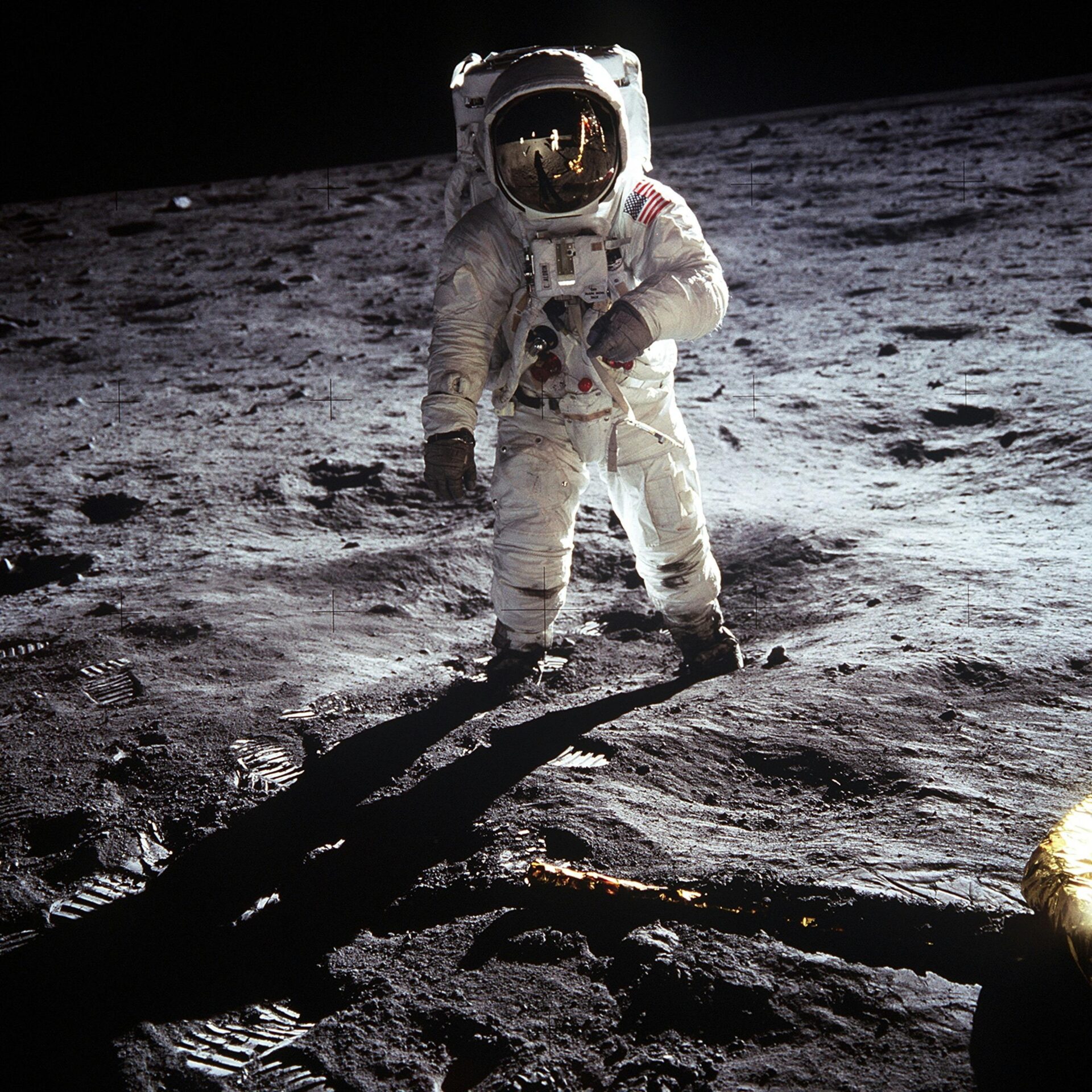
As we develop better propulsion technologies, closed-loop life support systems, and orbital construction methods, the complexity and size of these spaceports will increase. In 50 to 100 years, we may indeed see spinning orbital hubs with artificial gravity, hosting thousands of people, multiple docking bays, and outbound ships destined for other planets. Just as an organic restaurant in Chicago grows from a local innovation into a community hub, orbital hubs may expand from modest beginnings into thriving centers of interplanetary commerce.
Spaceports will be more than infrastructure—they will be nodes of culture, trade, governance, and identity. Much like seaports and airports shaped the history and economies of Earth-bound civilizations, spaceports will define the contours of our space-based future.
And as they evolve, so too will our imagination. Science fiction will continue to inspire engineers, architects, and dreamers, just as the visions of Clarke, Asimov, and Roddenberry helped shape the ambitions of today’s space entrepreneurs. The spaceport of the future may begin as a cluster of modules in low Earth orbit, but it will grow into something far grander—a true gateway between worlds. Much like how a theracycle helps people build strength and endurance step by step, these early projects will form the groundwork for a future of vast interstellar progress.